


Portfolio of Work
Thank you for perusing my writing portfolio. You will find a variety of works below from my personal blog and other publications.
I enjoy collaborating with passionate change-makers. If that’s you, let’s talk!

Unpopular Opinion: Surviving the Ivory Tower Has Made "Real World" Work a Cakewalk.
That’s when I realized that the rigorousness of my academic training overqualified me for “Real World” work in a good way.
“What are you going to do with a PhD in English?”
While completing my doctoral dissertation, I would always answer this skeptical question the same way: “Become an English professor, I hope.” Little did I realize that my PhD was preparing me for a much healthier, happier, and easier life outside of academia and teaching.
It’s a common myth that a humanities PhD is a deeply impractical pursuit, almost completely divorced from the concerns and needs of the world beyond campus borders. When I started freelancing, however, I was stunned at how well my writing was received and how quickly I was able to impress people in a variety of writing styles. That’s when I realized that the rigorousness of my academic training overqualified me for “Real World” work in a good way.
To complete my PhD in English literature, I had to write a dissertation: a book-length document in which I advanced a complex argument about a variety of literary works and used quotes from those works to prove my point. Dissertations are rarely masterpieces, since they are almost always a first attempt at a really difficult task. All you have to do is ask an academic how much they had to revise their dissertation to make it a published book to realize how messy they usually are.
However, few training programs give writers the opportunity to gain so much experience practicing how to communicate complex ideas clearly and concisely. While Malcolm Gladwell’s famous “10,000-hour” rule has been rightly debunked by the very researcher whose paper inspired Gladwell to make it up in the first place, writing is a notoriously painstaking and inefficient process. I spent six years, give or take, working on my dissertation. That’s a lot of years to hone very difficult skills.
In the same piece linked above, the author mentions that the quality of practice times is far more important than the quantity. One of the most daunting aspects of a dissertation is that you should be able, as the sayings go, to explain what you’re working on to your mother (who presumably knows nothing about your work), or an intelligent 13 year-old. That’s one of the toughest and most valuable writing skills I’ve ever encountered. Another valuable skill you learn when writing a dissertation is to take what is usually about a 40-page document and trim it down to half its size for a journal article or a conference paper. In short, you’re learning how to take a complex idea and scale it up or down depending what you need to do with it.
You’re also doing this work under crushing pressure. No editor or client I’ve worked with has been even half as demanding or critical as my PhD advisors. I don’t necessarily condone this “tough love” approach; mental health statistics showing that PhD students are far more depressed than the general population suggest that they need building up as much as tearing down. (In my experience, professors seem to assume that you’re already at the top of your field and therefore already know you’re good enough. The opposite is true; impostor syndrome is pervasive.)
These are just two of the many examples of how the rigor of my PhD experience more than prepared me for writing and editing outside of academia. I have received a depth and quality of training most writers and editors lack, and it has given me an overwhelming advantage when it comes to my work now. The best analogy I can give is the difference between running a marathon (which I’ve done, twice) with a 50lb weight on your back compared to running unburdened in the latest, most innovative training shoes. That’s not to say I don’t have things to learn, or that I don’t have room to improve. Rather, I’ve been able to learn what I need to know and implement it very quickly. Better yet, I have so much more confidence in myself and my work, and it shows.
So, if you’re an editor looking for a writer, or a writer looking for an editor, let go of the myth that PhDs in the real world have a steep learning curve. We’re more likely to be the most skilled, as well as the most knowledgable, people in the room. Even better, we love to keep learning, and we’re always ready to embrace a challenge.








Browse by tag:
- Women's March
- Shadow Dragon
- Whole 30 Diet
- Broadway
- New York City
- Unsolved Mysteries
- Professional Life
- Healthy Living
- Agriculture
- Poetry
- Inflammatory Bowel Disease
- USA Guided Tours
- Blog
- Drawdown
- Research Article
- Musings on Life
- Activism
- Higher Education
- Portfolio
- Family Planning
- Mythical Tales
- True Crime
- Climate Change
- Mass Incarceration
- Nerdy Things
- Sonnets
- Fantasy
- Music Reviews
- Short Stories
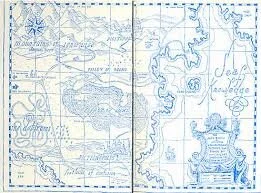
The Impossible Possibility of The Phantom Tollbooth
At that moment in my life, I needed the possibility of the impossible.
“WHY NOT?–
That’s a good reason for almost anything,” explains the gateman at the entrance to Dictionopolis, the mysterious kingdom of words in Norman Juster’s The Phantom Tollbooth. “A bit used, perhaps, but still quite serviceable.”
That used, but still quite serviceable, reason, “why not,” was the one that convinced me to finally read The Phantom Tollbooth. Like its young protagonist, Milo, I had too much time on my hands and nothing I wanted to do with it. And the brightly-covered blue paperback edged in pink, featuring a thinly-sketched boy pondering a dog with a giant clock for a midsection, was lying unread in my room.
I did not like fantasy. It scared me. Not in a Scary Stories to Tell in the Dark kind of way; I actually loved those books and the heebie jeebies they gave me. More in an anything beyond the lines of normal is bad kind of way.
The best illustration of this perplexing discomfort is how terrified and weirded out I was by Peter Gabriel’s “Sledgehammer” music video. Groundbreaking in its use of stop-motion animation and claymation, it contained all sorts of strange: two roast-ready chickens dancing, a portrait of Gabriel’s face made of vibrating pieces of fruit, a claymation version of the singer with sledgehammers for hands.
Even a fantastical title could put me off, and I was a voracious reader. It took me ages to crack open a copy of E.L. Konigsburg’s From the Mixed-Up Files of Mrs. Basil E. Frankweiler, which I loved. Even so, I could barely glance at my friend’s beloved copy of Konigsburg’s Jennifer, Hecate, Macbeth, William McKinley, and Me, as if it were a giant spider in the corner. Too many weird names. I’ve still never read it, though I love and have taught Macbeth.
Only a life-changing upheaval could persuade me to try fantasy, and mine was a doozy.
I didn't buy The Phantom Tollbooth; it was a gift. My friend Lesley and I no longer went to the same school, so I don’t even remember how she learned that I was in the hospital for a severe relapse of inflammatory bowel disease. All I know is that she and her mom brought me The Phantom Tollbooth. I set it aside, too drained for something potentially Peter Gabriel-esque. It was 1992. I was twelve.
Once home, slowly putting back the 30 pounds I had lost on my already small frame, I had a lot of solitary time on my hands. Both of my divorced parents worked, I lived in a neighborhood with no kids my age, and I didn’t have much energy to play, anyway. Books had always been my escape. Any words, really—my parents had given up years ago trying to keep me from reading the condiment labels at the dinner table. So, boredom+dis-ease+disease equaled “WHY NOT?” It was the right alchemical, astrological time for The Phantom Tollbooth.
Given this love of words, it makes sense that my fantasy breakthrough came through a book built upon puns and figurative language taken literally. The Phantom Tollbooth opens when Milo, a perpetually bored child, receives a mysterious package: a DIY purple cardboard tollbooth “FOR USE BY THOSE WHO HAVE NEVER TRAVELED IN LANDS BEYOND.” With a shrug, he figures he has nothing else to do and pays the fare.
His first stop is Expectations, from which he must—you guessed it—go Beyond. Insightful wordplay shapes the quest that Milo undertakes to bring the Princesses of Rhyme and Reason back to the Kingdom of Wisdom. From the scenic Point of View in the Forest of Sight, to the symphony of color that plays the sunrise and sunset into being, to the warring kingdoms of Dictionopolis and Digitopolis, Milo keeps encountering new ways of looking at old things--and seeing something in them he’s never noticed before.
With him throughout the journey are the Humbug, a pretentious yet ultimately kind and helpful insect, and Tock. Tock is the watchdog on the cover, guarding time with all the ferocity appropriate for a guard dog. (He roars with anger when Milo blithely mentions wasting time.)
This magical book filled me with a joy I hadn’t felt since my hospitalization. It was just so fun. As with all great books, moreover, the fun had a profound, purposeful wisdom to impart. After Milo, Tock, and the Humbug have successfully brought Rhyme and Reason home, King Azaz of Dictionopolis and the Mathemagician of Digitopolis tell Milo what they couldn’t say when he was setting off on his quest: that the whole thing was impossible:
“Yes, indeed,” they repeated together; “but if we’d told you then, you might not have gone--and, as you’ve discovered, so many things are possible just as long as you don’t know they’re impossible.”
At that moment in my life, I needed the possibility of the impossible.
I couldn’t imagine that I might, one day, feel better again. My guts had irrevocably changed, and with them my life. The Phantom Tollbooth showed me the weird could be wonderful and full of joy, not just wacky and full of nonsense. As a fellow boy Milo encounters at Point of View points out, “it's all in how you look at things.”
The Phantom Tollbooth helped me look at fantasy differently. It taught me that imagining things beyond the possible was not an act of insanity and abnormality but, rather, of courage and hope. It’s a lesson I’ve never forgotten.
Browse by tag:
- Activism
- Agriculture
- Blog
- Broadway
- Climate Change
- Drawdown
- Family Planning
- Fantasy
- Healthy Living
- Higher Education
- Inflammatory Bowel Disease
- Mass Incarceration
- Music Reviews
- Musings on Life
- Mythical Tales
- Nerdy Things
- New York City
- Poetry
- Portfolio
- Professional Life
- Research Article
- Shadow Dragon
- Short Stories
- Sonnets
- True Crime
- Unsolved Mysteries
- USA Guided Tours
- Whole 30 Diet
- Women's March
Freedom in Constraint: Why the Sonnet Is the Perfect Genre for a Lockdown
In this age of pandemic, the itch to write a sonnet comes on as suddenly as the itches on my face I fight not to scratch. Luckily, I can satisfy the former urge.
In this age of pandemic, the itch to write a sonnet comes on as suddenly as the itches on my face I fight not to scratch. Luckily, I can satisfy the former urge.
The sonnet is the perfect genre for a plague: a bite-sized poetic snapshot of a mood using strict patterns of rhyme and meter. Neither too time-consuming nor too easy, it’s an exercise of creative freedom within constraint. It’s the coronavirus lockdown in poetic form.
I am not a professional poet–not even amateur. Most of the poems I’ve written in my lifetime were school assignments. Like most people in these unprecedented times, however, I find myself doing unprecedented things. At a time when our eyeballs are chafing against windowsills and our cheeks are chafing against mask straps, the sonnet reminds us that rules can enable fun, not just suffocate it. If you’re someone whose creativity has been shut down by the shutdown, consider playing around with the sonnet form yourself.
The sonnet’s rise to poetic prominence is in part a plague story. The 14th-century Italian humanist and poet Francesca Petrarca (Petrarch to English speakers) didn’t invent the sonnet, but he popularized it. The 317 sonnets in his Il Canzionere, or ‘Songbook,’ chronicle a man’s unrequited love for a beautiful married woman named Laura. Her passionate gaze burns him like fire. Her icy coldness chills. Cupid’s arrows shoot into his heart and leave him in exquisite pain that sometimes feels like pleasure.
Then she dies. Scholars don’t agree on whether Laura was a real person, but the best candidate is a noblewoman named Laura de Noves, who died at 38 of the Black Death. In Il Canzionere, this event transforms the tone of the remaining sonnets from unrequited physical desire to spiritual veneration and longing.
These poems, in other words, tell the story of a socially and physically distant love devastated by plague.
The rules of the sonnet are relatively straightforward. Petrarch’s sonnetti (‘little songs’) are 14 lines and two stanzas long. Between the first 8 lines, or octet, and the sestet, the remaining six, is a volta, or ‘turn.’ It usually shifts tone and perspective from a more descriptive mode to a philosophical one.
In English, the standard sonnet meter is iambic pentameter: 10 syllables, divided into 5 pairs of unstressed-stressed sounds (da DUH). The rhyme scheme can vary. Petrarch used ABBA ABBA for the octet, then some combination of CDE CDE for the sestet. Spenser copied him.
Shakespeare, that endless innovator, created an easier version for a language with a lot fewer rhymes: ABAB CDCE EFEF GG. (Four quatrains and a couplet.) Those are the rules, but remember that rules are meant to be broken.
Robert Frost, who published nearly 40 sonnets himself, once called free verse “tennis without a net.” The game, he implies, would be boring if the webbing and the lines didn’t compel players to develop devastating shots and angles. Same with board games: the possibilities are infinite without being exhausting precisely because the rules already exist. We just play the game; we don’t have to invent it.
Love remains the sonnet’s most common subject, but it’s not the only one.
Keats wrote sonnets about reading Shakespeare. Wanda Coleman wrote about slavery. In 2018, Terrence Hayes published American Sonnets for My Present and Future Assassin, meditating on what it means to be a black man in Trump’s America. The most anthologized one opens,
I lock you in an American sonnet that is part prison,
Part panic closet, a little room in a house set aflame.
I lock you in a form that is part music box, part meat
Grinder . . . . (ll.1-4)
Hayes’s sonnets rarely rhyme. They disregard meter almost completely. Yet their rhythms are dynamic. They, too, take on a virus: the systemic virus of racism that plagued American society long before coronavirus.
When asked why he chose the sonnet form, Hayes said it provided “a great kind of containment.” It’s a perfect description. The sonnet demands concision. It asks that we pay attention to the form and sound of a word as much as the content. It requires focus in a time when, as I wrote in one of my own plague sonnets:
My sense of time has calcified to rust,
Like I’m suspended in solution, free
Of meaning, referentless . . . .
It helps me process the strangeness of these days with humor and compassion, as in this sonnet I wrote on boredom:
. . . . The line is thin
Between ennui and madness. Ask Wuhan,
Four months in. Playing pool with chopsticks, dressed
In sheets and giving speeches, like a queen
(Ordained or drag, your guess.) Thus boredom dons
A festive mask that fails to mask the stress.
Even when my other writing is as blocked as a clogged toilet, an hour spent making up rhymes and playing with the length of lines helps me remember why I loved writing in the first place.
Nowadays, when the inspiration hits, I pull out my pocket-sized spiral notebook and my mechanical pencil and have some fun. After all, as my first plague sonnet concludes:
When movement kills, but stasis mummifies,
At least our minds and pens have space to glide.
Browse by Tag:
- Activism
- Agriculture
- Blog
- Broadway
- Climate Change
- Drawdown
- Family Planning
- Fantasy
- Healthy Living
- Higher Education
- Inflammatory Bowel Disease
- Mass Incarceration
- Music Reviews
- Musings on Life
- Mythical Tales
- Nerdy Things
- New York City
- Poetry
- Portfolio
- Professional Life
- Research Article
- Shadow Dragon
- Short Stories
- Sonnets
- True Crime
- Unsolved Mysteries
- USA Guided Tours
- Whole 30 Diet
- Women's March

The Truth Isn't As Strange As You Think: The Enduring Power Of Roswell
“Did the military conceal the most astounding discovery of the century?” With these portentous words, Robert Stack introduces the mystery of Roswell for his season 2 premiere of Unsolved Mysteries.
“Did the military conceal the most astounding discovery of the century?” With these portentous words, Robert Stack introduces the mystery of Roswell for his season 2 premiere of Unsolved Mysteries.
When the episode originally aired on September 20th, 1989, the mystery was a little-known incident involving the U.S. Army, a handful of locals, and strange debris found after an intense lightning storm at a ranch in southeast New Mexico.
Today, Roswell is a one-word talisman that rarely needs explaining — like Gettysburg, or Oprah. Even millennials have at least a roundabout familiarity with it, thanks to Roswell, New Mexico, a recent reboot of a 1999–2002 WB show named Roswell. Both are essentially teenage dramas with aliens added for novelty, but their existence is nevertheless evidence of the power of Roswell as a cultural event, however watered-down. As Seth Shostak, senior astronomer at the SETI Institute, described Roswell in 2017: “like the Kardashians — it’s famous for being famous.”
But when the Unsolved Mysteries segment aired 30 years ago, Roswell was a conspiracy theory just getting its legs nearly 50 years after the events that birthed it. Why on earth did it take so long?
It’s an especially puzzling question considering the military flat-out announced that it had discovered a UFO on the front page of the July 8th, 1947 edition of the Roswell Daily Record: “RAAF [Roswell Army Air Field] Captures Flying Saucer on Ranch in Roswell Region.”
The article’s lede passes off what UFO author Kevin Randle describes in the UM segment as “the most significant event of the twentieth century and probably the millennium” with a stunning deadpan:
The intelligence office of the 509th Bombardment group at Roswell Army Air Field announced at noon today, that the field has come into possession of a flying saucer.
Perhaps the ho-hum tone helps explain how, just as soon as it began, the story died a strangely quiet death. The next day, the government backtracked. They had made a mistake: the saucer was just a downed weather balloon.
A collective shrug, a “nothing to see here,” and the country turned back to more present, pressing concerns: birthing babies, moving to the suburbs, gawking at the rise of the Iron Curtain, trembling at the possibility of nuclear annihilation.
It’s those concerns, I’d argue, that explain why the Roswell Story went into deep hibernation, the planted seeds of a grassroots conspiracy movement needing decades to flourish¹.
Roswell is interesting less for the events themselves — though we’ll take a look at UM’s impressive production values in dramatizing the version of the tale they chose — than as a shiny, metallic yardstick (decorated with strange hieroglyphs!) for American attitudes toward government at any given moment.
Roswell, in other words, isn’t about what’s out there. It’s about what’s inside us.
The 1990s were, as Joseph Laycock puts it, “a high-water mark for public interest in UFOs and alien abduction.” Or, as Robert Goldberg writes in his excellent study of American conspiracy theories, aliens were “the the smiley face of the 1990s.”² By airing its Roswell segment in the final autumn of the 80s (and rebroadcasting it again in early January 1990), Unsolved Mysteries was part of the vanguard.
With Roswell, it’s crucial to realize that the “fact” of aliens landing on Earth matters slightly less than the government cover-up. The 90s were simply the peak of a growing 20th-century distrust in government that first went mainstream following the JFK assassination. The Vietnam War, the FBI’s COINTELPRO surveillance program infiltrating leftist and civil rights groups, Watergate, the Iran-Contra Affair, and then Waco and Ruby Ridge only fed the fire.
These events revealed a government that made misguided, unethical, and even illegal decisions that ultimately — and often deliberately — harmed its own citizens. It’s little wonder that The X-Files, which Goldberg calls “the most important carrier of the Roswell story,” took the basic premise of a government coverup and ran with it.
Little surprise, then, that 71% of Americans in 1996 answered in the affirmative when asked if the government knew more about UFOs than it let on, and a full third surveyed believed a flying saucer did crash at Roswell.³
I can’t remember what I thought when I first saw the Roswell segment on Unsolved Mysteries, though the rash of UFO segments that followed — the Kecksberg and Rendelsham Forest incidents, the Vancouver and Phoenix Lights, the Hudson River Valley and Belgium sightings, the disappearance of Fredrick Valentich and the Allagash Abductions — steadily grew into a mound of evidence my tween- and teenage brain couldn’t ignore. (I also loved The X-Files, though I think UM primed me for that, rather than the other way around.)
In many ways, UM’s first serious engagement⁴ with a UFO story impresses: double the length of the typical piece, filmed across sprawling desert ranches and in ye olde rural town sets, replete with army jeeps and stern uniformed men ordering people not to say anything about what they’ve seen, and salt-of-the-earth farmers talkin’ slow and sayin’ little.
The bedrock of the evidence comes from eyewitness testimony. Or, more accurately, one posthumous video clip of an eyewitness (Maj. Jesse A. Marcel), one live eyewitness (his son, Jess Marcel, M.D.), and a handful of secondhand accounts.
Loretta Proctor underwrites the trope of innocent civilians caught up in something much bigger than themselves when she describes Mac Brazel, the man on whose ranch the debris landed, as “just an old time cowboy, I guess you’d say.” “If he told you something,” she gently insists in a slight country voice cracked with age, “you could pretty well depend on it.” She tells how Mac urged her and her husband Floyd to go see the debris for themselves and laconically notes, “we should’ve, and yet — we didn’t.” (Ho-hum.)
Next, the amazingly-named Vern Maltais explains how his friend soil conservationist Barney Barrett was “just what you would call a real straight guy” and so he knew he was telling the truth when he described seeing alien bodies with “heads . . . larger than the bodies.” “I’d stake my life on his reliability; he would never concoct any story. That’s why I believe it to be true.”
Finally, a woman with the equally amazing name of Sappho Henderson vouches for her late husband, Oliver “Pappy” Henderson, the pilot who purportedly flew the first pieces of wreckage away from Roswell. “He never told anything he wasn’t supposed to . . . and therefore, it was 34 years after this incident happened that I heard about it.” She leaves it to us to resolve the contradiction.
It should come as no surprise that Unsolved Mysteries cherry picks the information it wants you to have (something it committed far more egregiously with some of its true crime segments, to be explored in later episodes of UUMF). The only line taken from Jesse Marcel’s taped interview, for instance, is the following: “I tried to bend the stuff, [indecipherable] it will not bend. I even tried to burn it, [indecipherable] it would not burn . . . . we even tried making a dent in it with a 16-pound sledgehammer, still no dent in it. One thing I was certain of . . . it was not a weather balloon.”
Since he was an army intelligence officer and claimed to be familiar with the latest aerodynamic technology, his bafflement sounds definitive. However, upon listening to a larger excerpt of the interview, it becomes clear that Marcel isn’t actually talking about himself: the indecipherable pieces are actually the words “he says.” On a 1980 episode of In Search Of . . . focused on UFO coverups, Marcel similarly reveals that he, too, is talking about secondhand experience:
One of my boys told me, there’s something unusual here. He said, uh, I tried to make a dent in this metal . . . he says you can’t bent it, you can’t make a mark on it, he says I took a sledgehammer and whammed it . . . the sledgehammer bounced right off of it.
Even more revisions and contradictions arise in the next few years after the segment aired, including books that recast the U. Penn archeology students as Texas Techies instead and moved the whole Barney Barnett incident from the Plains of San Augustin — 125 miles west of the crash site to the site itself.⁵
(UM conveniently avoids mentioning exactly where Barnett was, leaving us to assume he was much closer to Mac Brazel’s ranch than he actually was. It also ominously notes, “all efforts to track down the members of the archaeology dig have been unsuccessful.”)
In other words, every attempt to string together a seamless story of a UFO crash and government cover-up soon became a game of Whac-A-Mole, as each successfully forged narrative connection launched another break in the space-time continuum that required herculean illogic to solder back together.
The government, quelle surprise, does not make an appearance, or even a statement, in the segment. This gaping absence of an authorized response leaves a void far too easily filled by the simple yet not simple-minded people of Roswell: their matter-of-fact openness and calm demeanors, speaking with soft conviction of the strange craft, the unheard-of properties of its materials, and the bizarre admission then backtracking of those in charge of disseminating information back in 1947.
The government, in other words, punted the Roswell Story as badly as it did in its first press release on July 8th. In 1952, the Air Force launched Project Blue Book and the CIA created the Robertson Panel to investigate another rash of sightings. Both investigative groups concluded that ETs did not, in fact, exist, although they were concerned about sightings overwhelming military communications as the Cold War heated up.⁶
To clear those channels, Project Blue Book went on a poorly-planned and executed offensive to discredit UFO theorists, thereby making worse the very problem they had set out to solve. Only after the Freedom of Information Act was passed in 1966 did the military reluctantly reveal the existence of Project Blue Book, only furthering the impression that the government had something to hide.
Worst of all was the 1994 release of a thousand-page report insisting that the crash was a product of Project Mogul, a top-secret military program from 1947–49 that attempted to use high-altitude balloons to detect Soviet atomic bomb tests via sound waves. Conspiracy theorists were not convinced.
Older and wiser now, I actually am. Did things happen exactly as the government claims in the 1994 report? Possibly not — not that I plan to read all 1,000 pages to refine that opinion. But I am firmly in the camp that conspiracy theories are, on the whole, attempts to provide a seemingly rational explanation — a process Cold War historian Zachary Johnson Jacobson brilliantly describes as “metastasiz[ing] reason” — for what feel like irrational events: predominantly, events in which less-than-ordinary people (Lee Harvey Oswald the Ur-example) inflict seismic change on the world. It’s a means, in other words, of finding order where only entropy exists.
Nevertheless, the government’s reversals, omissions, denials, and who, me? attitude understandably stoked the conspiratorial fires. For that, they have only their own arrogance and incompetence to blame. They underestimated the faith of their audience, who wanted to believe in their villainy perhaps even more than they wanted to believe in aliens.
If the 90s was the peak of the alien boom, then what deflated that particular weather balloon? Historian Ben Macintyre and others have suggested that the internet effectively enabled skeptics to prevail, given the democratization of information. The flourishing of conspiracy theories today, from anti-vaxxers to Flat Earthers, suggests otherwise.
If you ask me, it all ended on September 11th, 2001.⁷
To believe that your government has secreted away an alien craft and its occupants for half a century belies an impressive belief in that government’s capabilities. This faith shattered along with the glass and the concrete of the World Trade Center. Out of the rubble and the clearing smoke, Americans instead learned that their government sort of/maybe/kinda knew something bad might happen, but complacency and incompetence led to a miserable failure to predict and prevent the magnitude of damage wreaked by 17 guerrilla warriors led by a man hiding out in caves.
In the 50s, Carl Jung hypothesized that believing in UFOs helped citizens of the world manage the stress of living in a new age of potential global apocalypse. Presumably people wanted to imagine a scenario in which the world might join together against a common threat, not unlike the 1996 blockbuster film Independence Day. In the first decade of the 21st century, however, it seems that terror coming from the skies felt far too close to home to be a potential source of deflection or distraction. UFO sightings plummeted, and some UFO groups disbanded for lack of membership.
Our belief in aliens is growing slightly, however, in the wake of that Noughties dip. A 2013 Harris Poll found that 36% of Americans believe in aliens, more than those that believe in witches (29%), but less than the 42% who believe in ghosts. Notably, that question didn’t specify whether or not those aliens had landed — I wouldn’t be shocked if that number were much lower.
If Roswell is the “holy grail”⁸ of UFO incidents, then the mainstream moment of alien conspiracy in the 90s was its Da Vinci Code moment. The Roswell segment meant a lot for Unsolved Mysteries, clearly, because UFO stories would dominate its broadcasts for the next few years — even anchoring season premieres for four years in a row (Seasons 2–5).
We wanted to believe, it turns out, that our government was hiding the truth from us like a parent hiding the wi-fi password. What we didn’t realize at the time was that what we actually wanted to believe in was the power and competence of the government itself.
On our next episode: we’ll look at some of the more memorable UFO segments and explore the significance — and fallibility — of eyewitness accounts.
[1] It’s not as though no one mentioned the Roswell incident until former nuclear physicist Stanton Friedman began a detailed investigation in 1978; the handful of references in books like Harold Wilkins’s 1954 Flying Saucers on the Attack, Frank Edwards’s 1966 Flying Saucers, Serious Business, and Robert Loftin’s Identified Flying Saucers in 1968 all referenced Roswell, but only briefly, as one among many suspicious incidents. Robert Alan Goldberg, Enemies Within: The Culture of Conspiracy in Modern America (New Haven: Yale Univ. Press, 2001), 193.
[2] Ibid, 223.
[3] 225.
[4] It’s not the first engagement, full-stop: that badge of dishonor goes to the Gulf Breeze UFO incident, which aired on 5 October 1988 and 3 October 1990, the latter an update. It’s not included on the Amazon Prime episodes and has long been accepted in most circles as a hoax. See this charming article for a more detailed look.
[5] Goldberg, 198.
[6] Ibid, 209–15.
[7] It’s a horrible irony that Goldberg’s book was released in 2001 and clearly written before 9/11. We can only imagine how he would have revised and added to the manuscript had publication been delayed.
[8] Goldberg, 190.
Browse by Tag:
- Activism
- Agriculture
- Blog
- Broadway
- Climate Change
- Drawdown
- Family Planning
- Fantasy
- Healthy Living
- Higher Education
- Inflammatory Bowel Disease
- Mass Incarceration
- Music Reviews
- Musings on Life
- Mythical Tales
- Nerdy Things
- New York City
- Poetry
- Portfolio
- Professional Life
- Research Article
- Shadow Dragon
- Short Stories
- Sonnets
- True Crime
- Unsolved Mysteries
- USA Guided Tours
- Whole 30 Diet
- Women's March

Drawdown Strategies to Mitigate Climate Change: Regenerative Agriculture
Chemical and mineral fertilizers and pesticides, overtilling, and excess irrigation practices over the last 200 years have released over 80 billion tons[iii] of CO2 into the atmosphere. Regenerative agriculture[iv], in contrast, is a holistic approach that regenerates soil health.
In 2014, the Rodale Institute[i], an organic agriculture research center based in Pennsylvania, heralded[ii] a revolutionary technology with potential to store more than 100% of global annual CO2 emissions:
The cost is minimal and is adaptable to local contexts the world over. It can be rolled out tomorrow providing multiple benefits beyond climate stabilization. The solution is farming.
Not just any farming, however — especially not the conventional type that has dominated agriculture for the last 200 years. By introducing chemical and mineral fertilizers and pesticides, overtilling, and excess irrigation, conventional farming has released over 80 billion tons[iii] of CO2 from the soil into the atmosphere over that time — at least 50% of the carbon once stored in the Earth.
Regenerative agriculture[iv], in contrast, is a holistic approach to farming that focuses on regenerating soil health, thereby recreating a massive carbon sink. Some researchers estimate that switching as little as 10% of agricultural land[v] from conventional agriculture — which represents nearly 15%[vi] of annual global greenhouse gas emissions — to regenerative can sequester enough CO2 to reverse climate change. At the very least, switching to regenerative agriculture can reduce or even eliminate conventional farming’s detrimental; soil erosion and water depletion alone cost the U.S. $37 billion annually and $400 billion worldwide[vii]. In short, “conventional industrial agriculture produces food cheaply by not paying the cost of the damages it causes.”[viii]
The minimal cost and maximal potential of regenerative agriculture not only to store carbon but also to produce more resilient, nutritious, and frequent crops is why the Drawdown Organization has ranked regenerative agriculture #11 in its list of the top 100 ways[ix] of mitigating climate change.
Breaking Down the Basics of Regenerative Agriculture (Building Up the Soil)
Regenerative agriculture refers to a variety of methods that can be used to increase the health, resilience, and carbon capacity of a farm’s soil. Regeneration International[x] and The Carbon Underground[xi] list the following criteria[xii] for a method to qualify as regenerative agriculture:
(i) increase soil health and fertility
(ii) increase water retention and prevent runoff
(iii) increase biodiversity and ecosystem health and resiliency
(iv) increase carbon sequestration by removing atmospheric CO2
The core practices[xiii] that exemplify these criteria are:
1. Crop rotation and cover cropping with diverse crops and perennials:
Cover crops[xiv]— defined as those planted between main cash crops, such as perennial mulches — heighten carbon sequestration, limit soil and water erosion, prevent weeds from rooting, and increase soil fertility. Some regenerative farms use as many as 10-25 different types of cover crops, thereby adding a whole wealth of different nutrients to the soil.
2. Composting:
Rodale Institute defines composting[xv] as “the controlled aerobic decomposition of organic materials such as plants, animals or manure,” thereby increasing soil fertility and biodiversity while reducing the need for water and fertilizer. A 10-year study[xvi] comparing rotated crops composted with dairy manure to conventionally farmed fields found that the composted crops sequestered more than two metric tons of carbon (MgC) per hectare, while the conventional fields lost carbon.
The BEAM (Biologically Enhanced Agricultural Management) methods developed by New Mexico State’s Dr. David Johnson,[xvii] which use a composted soil with particularly high microorganism content, have proven to be particularly fruitful for high carbon sequestration; researchers estimate that BEAM could sequester 184 gigatons (Gt) of CO2 per year — almost five times the 2017 global CO2 emissions of 38 Gt[xviii].
3. Zero-to-low tillage:
Tillage breaks up the soil, destroying crucial fungi that otherwise holds the soil together and releasing CO2 in the process. When no-till organic practices are used, they can increase organic carbon in the soil by 9% after 2 years and 21% after six years[xix] . The organic part is crucial, since N2O from nitrogen fertilization eventually offsets the benefit of carbon sequestration[xx]. In addition, planting perennials and using other agroecological approaches[xxi] to create pest-resilient food systems results in less pest damage that conventional insecticide-treated crops[xxii].
4. Managed grazing:
Almost 70% of agricultural lands are used for grazing, and pastures managed with regenerative practices like those above[xxiii] — as well as silvopastoral agriculture, #9 on the Drawdown list[xxiv]— can increase carbon in the soil and store it much deeper than conventional systems.
How You Can Support Regenerative Agriculture
The benefits of regenerative agriculture are not as prominent as they could be because of conventional agriculture’s wealth and lobbying power. A 2017 report by the United Nations Food and Agriculture Organization, however, predicted that the world’s topsoil layer could disappear completely in 60 years[xxv]. Regenerative farming may thus be one of the most crucial climate mitigation strategies not only for saving our planet but feeding its people.
The good news: even if you don’t work in the agricultural sector, you can support the many organizations working to increase knowledge and practice of regenerative agriculture.
Food Tank highlights 17 global organizations that promote regenerative agriculture, from Aranya Agricultural Initiatives[xxvi] and the Timbaktu Collective[xxvii] in India — which loses forty times as much soil each year as the U.S.[xxviii] — to the Traditional Native American Farmers Association[xxix] and Kiss the Ground[xxx] in the U.S.
Similarly, various companies have pledged various levels of commitment[xxxi] to regenerative agriculture, from contracting with regenerative farms (Annie’s Homegrown[xxxii]) to collaborating on a standard certification process[xxxiii] (Dr. Bronner’s[xxxiv] , Patagonia[xxxv] ). You can show your appreciation through your buying power, word-of-mouth to friends and family, and social media.
Related LEED® v4 Credits:
LEED BD+C, LTc Sensitive Land Protection (1 pt)
[i] https://rodaleinstitute.org
[ii] https://rodaleinstitute.org/wp-content/uploads/rodale-white-paper.pdf
[iii] Drawdown, 55.
[iv] https://regenerationinternational.org/2017/02/24/what-is-regenerative-agriculture/
[v] https://regenerationinternational.org/2018/09/21/reversing-climate-change-regenerative-agriculture/
[vi] https://www.wri.org/blog/2014/05/everything-you-need-know-about-agricultural-emissions
[vii] Drawdown, 55.
[viii] Drawdown, 54.
[ix] Drawdown, 54.
[x] https://regenerationinternational.org
[xi] https://thecarbonunderground.org
[xii] https://regenerationinternational.org/2017/02/24/what-is-regenerative-agriculture/
[xiii] https://www.greenamerica.org/blog/regenerative-agriculture-heals-soils-reverses-climate-change
[xiv] Drawdown, 55.
[xv] https://rodaleinstitute.org/wp-content/uploads/rodale-white-paper.pdf
[xvi] Ibid.
[xvii] http://02f.e55.myftpupload.com/wp-content/uploads/2016/03/Quivira_Johnson1.pdf
[xviii] https://www.cbsnews.com/news/carbon-dioxide-emissions-rise-to-24-million-pounds-per-second/
[xix] Ibid.
[xx] https://www.nature.com/articles/s41558-018-0087-z
[xxi] https://academic.oup.com/bioscience/article/66/7/600/2463250
[xxii] https://www.forbes.com/sites/devinthorpe/2018/12/12/how-investing-in-regenerative-agriculture-can-help-stem-climate-change-profitably/#3c9982e43e5c
[xxiii] https://regenerationinternational.org/2018/09/21/reversing-climate-change-regenerative-agriculture/
[xxiv] http://altosustainability.com/blog/2019/02/01/silvopasture-drawdown-strategy-8/
[xxv] https://www.scientificamerican.com/article/only-60-years-of-farming-left-if-soil-degradation-continues/
[xxvi] http://permacultureindia.org
[xxvii] http://www.timbaktu.org
[xxviii] Drawdown, 55.
[xxx] https://kisstheground.com
[xxxi] https://www.ecowatch.com/regenerative-agriculture-climate-change-2379810388.html
[xxxii] https://www.annies.com/farm-to-yum/soil-matters
[xxxiii] https://www.drbronner.com/all-one-blog/2018/01/moving-towards-regenerative-organic-certification/
[xxxiv] https://www.drbronner.com/about/our-earth/combatting-climate-change-on-the-ground/
[xxxv] https://www.patagonia.com/blog/2018/03/regenerative-organic-certification-unveiled/
This article was originally written for ALTO Sustainability LLC in a series of articles that take a deeper dive into the real-world strategies outlined in the book “Drawdown” for mitigating climate change.
Browse by Tag:
- Activism
- Agriculture
- Blog
- Broadway
- Climate Change
- Drawdown
- Family Planning
- Fantasy
- Healthy Living
- Higher Education
- Inflammatory Bowel Disease
- Mass Incarceration
- Music Reviews
- Musings on Life
- Mythical Tales
- Nerdy Things
- New York City
- Poetry
- Portfolio
- Professional Life
- Research Article
- Shadow Dragon
- Short Stories
- Sonnets
- True Crime
- Unsolved Mysteries
- USA Guided Tours
- Whole 30 Diet
- Women's March

Drawdown Strategies to Mitigate Climate Change: Tropical Forests
Tropical forests[i] are nature’s most powerful carbon sinks, absorbing harmful greenhouse gas emissions through photosynthesis. When they’re destroyed, therefore, these sinks release all that stored carbon back into the environment.
Tropical forests[i] are nature’s most powerful carbon sinks, absorbing harmful greenhouse gas emissions through photosynthesis. When they’re destroyed, therefore, these sinks release all that stored carbon back into the environment; in fact, a landmark 2017 study[ii] determined that tropical forests now release more carbon[iii] than they absorb[iv] due to deforestation.
Tropical forests thus present a “win-win” or “lose-lose” scenario, a key reason why Drawdown lists tropical forests as #5[v] in its ranking of the 100 best climate change solutions.
What Are Tropical Forests?
Tropical forests are located between the Tropics of Cancer and Capricorn, which themselves are located 23.5° latitude north and south of the equator.[vi]. While these natural wonders once covered 12% of the Earth’s surface, human activity has reduced that percentage to 5%.[vii] Nevertheless, these areas still hold approximately 25% of the world’s carbon[viii]; the Amazon basin alone holds as much as 90-140 billion tons.
The Dangers of Deforestation and the Potential of Preservation
Deforestation currently comprises anywhere between 10[ix]-20[x]% of global greenhouse gas emissions. 70% of this deforestation[xi] occurs in the production of less than a handful of products: beef, timber, palm oil, and soy. Worryingly, 2016 and 2017 saw more tree loss than any previous years on record[xii]: an area approximately the size of Vietnam.
That said, deforestation policies work when the will to implement is there. One of the most successful of these occurred in Brazil, where a multi-pronged approach[xiii] resulted in an 80% drop in deforestation from 2004-12.
Forests are also far more resilient than previously thought, able to undo much of the damage caused by forest clearings. In only 66 years, for instance, researchers have found that regenerated tropical forests recover 90% of the diverse biomass found in old-growth forests.[xiv]
Two ambitious challenges suggest just how fruitful such policies can be. The 2011 Bonn Challenge and the 2014 New York Declaration on Forests collectively aim to restore nearly 450 million acres, which would not only result in sequestering 61.2 gigatons of CO2 by 2050 but also save money through watershed protection and improved crop yields.[xv]
What You Can Do to Save Our Tropical Forests
You can support the preservation and regeneration of tropical forests in a variety of ways, due to the intersectionality of the forests’ future with other crucial environmental and social issues.
Consider boycotting or pressuring companies that sell the “big 4” — cattle, timber, palm oil, and soy — to make or honor commitments to address deforestation. By 2017, nearly 450 companies[xvi] made such commitments, but enforcement is spotty at best.[xvii]
You can also campaign on behalf of indigenous land rights. Studies indicate[xviii] that the preservation and regeneration of tropical forests are more successful when indigenous cultures have influence over land policy, primarily because these communities are less likely to be in partnership with agribusiness than governments.
Finally, you can donate directly[xix] to organizations[xx] that work[xxi] to preserve and restore tropical forests.
Tropical forests are not only one of our most diverse and beautiful natural resources, but their survival is intricately linked with our own. We must protect them.
Related LEED® v4 Credits:
LEED BD+C, SSc Site Development – Protect or Restore Habitat (1-2 pts)
LEED BD+C, MRc Building Product Disclosure and Optimization – Sourcing of Raw Materials (1-2 pts)
[i] The UN Food and Agricultural Organization defines a forest as “a land area of more than 0.5 ha, with a tree canopy cover of more than 10%, which is not primarily under agricultural or other specific non-forest land use.” https://www.cbd.int/forest/definitions.shtml
[ii] http://science.sciencemag.org/content/358/6360/230
[iii] https://www.scientificamerican.com/article/surprisingly-tropical-forests-are-not-a-carbon-sink/
[iv] https://www.thenation.com/article/tropical-forests-are-flipping-from-storing-carbon-to-releasing-it/
[v] https://www.drawdown.org/solutions/land-use/tropical-forests
[vi] https://www.merriam-webster.com/dictionary/tropic
[vii] https://www.drawdown.org/solutions/land-use/tropical-forests
[viii] https://globalforestatlas.yale.edu/climate-change/climate-change-and-tropical-forests
[ix] https://papers.ssrn.com/sol3/papers.cfm?abstract_id=2458040
[x] Drawdown: the Most Comprehensive Plan Ever Proposed to Reverse Global Warming, ed. Paul Hawken, Penguin Books (2017), 114.
[xi] https://www.oxfamamerica.org/static/media/files/Deforestation_Free_Food.pdf
[xii] https://www.wri.org/publication/ending-tropical-deforestation-tropical-forests-and-climate-change-latest-science
[xiii] https://www.wri.org/publication/ending-tropical-deforestation-tropical-forests-and-climate-change-latest-science
[xiv] Drawdown, 115.
[xv] Ibid, 116.
[xvi] https://www.theguardian.com/sustainable-business/2017/sep/29/companies-zero-deforestation-pledges-agriculture-palm-oil-environment
[xvii] https://www.oxfamamerica.org/static/media/files/Deforestation_Free_Food.pdf
[xviii] https://www.wri.org/blog/2017/12/5-maps-show-how-important-indigenous-peoples-and-local-communities-are-environment
[xix] https://www.rainforest-alliance.org
[xx] https://www.ran.org
[xxi] https://amazonwatch.org/about/an-ecosystem-at-risk
Originally written for ALTO Sustainability LLC in a series of articles that take a deeper dive into the real-world strategies outlined in the book “Drawdown” for mitigating climate change.
Browse by Tag:
- Activism
- Agriculture
- Blog
- Broadway
- Climate Change
- Drawdown
- Family Planning
- Fantasy
- Healthy Living
- Higher Education
- Inflammatory Bowel Disease
- Mass Incarceration
- Music Reviews
- Musings on Life
- Mythical Tales
- Nerdy Things
- New York City
- Poetry
- Portfolio
- Professional Life
- Research Article
- Shadow Dragon
- Short Stories
- Sonnets
- True Crime
- Unsolved Mysteries
- USA Guided Tours
- Whole 30 Diet
- Women's March

Drawdown Strategies to Mitigate Climate Change: Family Planning
According to recent studies, having one fewer child is, in fact, the most impactful lifestyle change we can make to reverse climate change, potentially saving over twelve times the CO2 emissions than the combined savings of eliminating car and air travel AND eating a plant-based diet.
In 2017, researchers out of Sweden performed a meta-analysis[1] to determine which individual lifestyle changes have the most impact on greenhouse gas emissions. The four most important were living a car- and plane-free life, eating a plant-based diet, and “having one fewer child.” This last recommendation is, in fact, the most impactful, potentially saving over twelve times the CO2 emissions than the other three combined.
It is also considered the most controversial and thus dominated all the headlines, with articles like “Scientists Say Having Fewer Kids Is Our Best Bet to Reduce Climate Change”[2] and “Want To Slow Global Warming? Researchers Look To Family Planning.”[3]
There are valid reasons to be wary of family planning, as it has been used in the past as a tool to control populations, especially women; examples include China’s one-child policy[4], Romania’s 1966 Decree 770 that outlawed abortion[5], and state bills that have closed abortion clinics across the U.S[6]. As writer Valerie Tarico reminds us, “during much of history, male-dominated governments and patriarchal religions have treated a woman’s childbearing capacity as means to a societal or economic end.”[7]
Family planning policies can also empower women, however, as long as they are written to give women the agency to decide when and how to bear children. Moreover, women who avoid unplanned pregnancies prove to be healthier, more active in the workforce, and more resilient — a key necessity for adapting to climate change.
Family Planning Done the Right Way
Researchers estimate that as many as 225 million women in developing nations want greater reproductive agency but lack education and contraception. The result is nearly 74 million unintended pregnancies globally.[8] Population, Health, and Environment (PHE) programs like A Re Itireleng in South Africa demonstrate how family planning and environmental sustainability can reinforce each other; in this community-led effort, families learned how to time pregnancies to ensure proper nutrition while also learning about sustainable water practices.[9]
While fertility rates are higher in developing nations — that of Niger, the world’s highest, is 7.6 per women, compared to 1.9 in the U.S.[10] — children from developed nations are responsible for far more emissions. Right now, a child born in the UK is estimated to produce 20 times the CO2 emissions as one born in Bangladesh.[11] It is thus important to remember that access to family planning is necessary for women in all countries, especially since family planning is ultimately “about freedom and opportunity for women and the recognition of basic human rights.”[12]
What You Can Do to Help
Family planning initiatives currently receive only about 1% of all international development aid: a shockingly low number considering how important it is for the health of our world’s women, children, and climate.[13] Moreover, developing nations in particular want more robust family planning policies: of the 40 developing nations that submitted National Adaptation Programmes of Action (NAPAs) to the Global Environmental Facility requesting financial and logistical assistance, 93% of them listed population growth as a threat to climate change adaptation.[14]
Because educating girls and women and family planning are inextricable, there are a variety of organizations to which you can donate that target both; these include Hand in Hand International, Girls Not Brides, and the Malala Fund.
However, providing access to reproductive and contraceptive care in the U.S. is also of importance — and perhaps even more so, considering how much more greenhouse gases a child in a developed nation produces compared to one in a developing country. Donating to Planned Parenthood[15] and other family planning[16] organizations[17] can help ensure that all American women have the ability to determine their reproductive futures.
[1] iopscience.iop.org/article/10.1088/1748-9326/aa7541/pdf
[2] https://www.forbes.com/sites/janetwburns/2017/07/20/scientists-say-family-planning-is-our-best-bet-to-reduce-climate-change/#55c0448540f5
[3] https://www.npr.org/2017/07/19/537954372/want-to-slow-global-warming-researchers-look-to-family-planning
[4] https://nypost.com/2016/01/03/how-chinas-pregnancy-police-brutally-enforced-the-one-child-policy/
[5] https://www.theguardian.com/news/2014/dec/10/-sp-ceausescus-children
[6] https://www.vox.com/2018/7/3/17526222/abortion-states-access-roe-v-wade-kennedy
[7] https://grist.org/climate-energy/the-obvious-relationship-between-climate-and-family-planning-and-why-we-dont-talk-about-it/
[8] Drawdown, 78.
[9] https://womendeliver.org/2017/family-planning-win-win-women-climate-change/
[10] https://www.prb.org/ms-blog-family-planning-climate-change/
[11] https://www.bmj.com/content/353/bmj.i2102
[12] Drawdown, 79.
[13] Drawdown, 78.
[14] https://www.who.int/bulletin/volumes/87/11/08-062562/en/
[15] https://www.plannedparenthood.org
[16] https://www.societyfp.org/Home.aspx
[17] https://www.nationalfamilyplanning.org/page.aspx?pid=326
This article was originally written for ALTO Sustainability LLC in a series of articles that take a deeper dive into the real-world strategies outlined in the book “Drawdown” for mitigating climate change.
Browse by Tag:
- Women's March
- Shadow Dragon
- Whole 30 Diet
- Broadway
- New York City
- Unsolved Mysteries
- Professional Life
- Healthy Living
- Agriculture
- Poetry
- Inflammatory Bowel Disease
- USA Guided Tours
- Blog
- Drawdown
- Research Article
- Musings on Life
- Activism
- Higher Education
- Portfolio
- Family Planning
- Mythical Tales
- True Crime
- Climate Change
- Mass Incarceration
- Nerdy Things
- Sonnets
- Fantasy
- Music Reviews
- Short Stories

Ending the Era of Mass Incarceration: Where We Go from Here
In this final article of our 4-part series on mass incarceration, we’ll look at recent criminal justice reform on federal, state, and local levels and examine where we need to go from here to make mass incarceration a thing of the past.
In this final article of our 4-part series on mass incarceration, we’ll look at recent criminal justice reform on federal, state, and local levels and examine where we need to go from here to make mass incarceration a thing of the past.
In one of Barack Obama’s last acts while in office, he published a 56-page law commentary on criminal justice reform in the January 2017 Harvard Law Review. In “The President’s Role in Advancing Criminal Justice Reform,” he maintains that presidents can have real impact on this issue. He proves this thesis by highlighting policy initiatives made during his administration that span community-police relations to a prisoner’s re-entry into society:
• In January 2016, Obama worked with the Justice Department to overhaul the application process for the largest federal grant funding local and state law enforcement. To qualify for this support, departments must now show commitment to sending fewer citizens to prison by issuing citations rather than arrests, making mental health and addiction treatment widely available, and implementing other measures.
• The White House created the Data-Driven Justice Project in 2015 to help cities and counties identify ways to reroute people with mental health illnesses and addictions from jail cells and emergency rooms into treatment facilities.
• In 2010, Obama signed Congress’s Fair Sentencing Act, which lessened the disparities between the higher sentences imposed upon users and sellers of crack cocaine — more popular among African-Americans — and powder cocaine.
• Astonishingly, Obama was the first sitting President ever to visit a federal prison when he visited Oklahoma’s El Reno Federal Correctional Institution in July 2015.
• By the time he left office, Obama commuted the sentences of 1927 federal prisoners: a higher number than the last 6 presidents combined (not counting Presidents Ford’s and Carter’s mass pardons to Vietnam “draft dodgers”). Unlike most presidential pardons, which are retroactively applied to a sentence fully served, Obama’s commutations shortened prisoners’ jail time. 98% of these revised sentences were for drug-related offenses.
• He directed the Office of Personnel Management to remove the box on early-stage federal job applications that requires an applicant to reveal a past criminal conviction. In doing so, he brought the federal government level with 25 states that have “banned the box” on their public sector job applications. (9 of those 25 have also done so for private sector applications.)
In the commentary, however, Obama also highlights federal criminal justice reform measures that have failed. Perhaps the most important of these was 2015’s Sentencing Reform and Corrections Act (SCRA). This bill, authored by Senator Chuck Grassley (R-IA) and Senate Minority Whip Dick Durbin (D-IL), stalled on the Senate floor, despite having rare bipartisan support.
Had it passed, the bill would have reduced a variety of mandatory federal prison sentences; people with three drug convictions, for instance, would now serve 25 years instead of life, and 20-year drug sentences would drop to 15 years. Federal prisons would also be required to implement measures designed to reduce recidivism, such as minimizing solitary confinement for juveniles. These changes would have saved the Department of Justice $722 million over the next decade.
While Grassley and Durbin plan to send the bill back to the Senate, many campaigners for criminal justice reform are concerned about its future under the current administration. Even though Attorney General Jeff Sessions supported the Fair Sentencing Act, he was one of the Senate stalwarts who undermined the SCRA.
Some analysts, however, have already concluded that the movement against mass incarceration should focus its efforts on state and local channels over the next four years. Since 90% of the nation’s prison population is housed in state and local facilities, moreover, it’s on the state and local level where the most prisoners can be affected — regardless of any progress, or lack thereof, at the federal level.
*
A wide spectrum of criminal justice policies are in place at state and local prisons. Often, policies both more draconian and more lenient than the federal government co-exist in the same state. For instance, few stories in recent memory have encapsulated the intersectionality of mass incarceration’s racial, economic, and social injustices as heartbreakingly as that of Kalief Browder. Jay-Z, who along with Harvey Weinstein produced the 6-part documentary Time: The Kalief Browder Story currently airing on Spike, described Kalief as a “prophet” whose story “will teach all us grown-ups to love better and have more compassion.” Kalief Browder was a black high-school student from the Bronx who spent three years at Rikers Island awaiting a trial that never came for a crime — stealing a backpack — that he did not commit. His situation became a perfect storm of injustice. First, he was arrested on the flimsiest of eyewitness identifications for an alleged robbery. He languished in Rikers because his mother couldn’t afford the $3000 bail set for the class-C felony, and because New York is only one of two states (North Carolina is the other) that prosecutes 16 and 17 year-olds as adults. Worst of all, inhumane conditions meant that Kalief not only received beatings from fellow inmates and prison guards but spent over 800 days in solitary confinement. Kalief went into Rikers a 16 year-old, but he came out, as he put it, “feel[ing] like 40.” Scarred mentally and physically, he committed suicide in June 2015, at the age of 22. The public reaction to Kalief’s story proved crucial in bolstering the hard work of campaigners for Raise the Age NY, which aims to increase the legal age of criminal responsibility to 18. On February 14th, 2017, the New York Assembly voted 81-40 to pass the “Raise the Age” bill. The bill currently awaits a ruling from the state Senate. Other states have made headway on mass incarceration through sentencing reform bills. For instance, Michigan eliminated mandatory sentences for most non-violent drug offenses in 2002; a decade later, the prison population had fallen by 14%, and violent crime by 16%. South Carolina also ended mandatory minimums for drug possession in 2010; subsequently, violent crime and the prison population decreased 17% and 9%, respectively, over the next 4 years. * Local initiatives have also addressed the numbers of people shuffled through city and county jail systems. Local jails, unlike federal and state prisons, are designed to hold only short-term prisoners. Over 11 million Americans populate the nation’s 3100 jails each year, mostly serving non-violent, misdemeanor sentences. 64% of those jailed are mentally ill, whereas 68% have substance addictions. By combining local justice and healthcare data, for instance, Miami-Dade County identified almost 100 mentally-ill “super utilizers” who accounted for $13.7 million spent in hospitals and jails. The county subsequently trained all police officers and 911 dispatchers to de-escalate mental health crises. As a result, police arrested only 109 people over the last five years, despite answering 50,000 mental health calls. The county’s jail population fell from over 7000 to 4700, and 10,000 people who might otherwise have been incarcerated received mental health care. * However, as Obama notes in the Harvard Law Review, much remains to be done. Improving criminal data collection, reducing gun violence, identifying and reversing wrongful convictions, promoting good community-police relations, and restoring the right to vote to ex-felons are just some of mass incarceration’s under-addressed issues. What should we do if we want to relegate the age of mass incarceration to the history books? In short, we’ll need to commit ourselves to a three-part strategy: donate, educate, and participate. Begin by donating if you can to the following organizations committed to ending mass incarceration: All of Us or None, Critical Resistance, the Ella Baker Center for Human Rights, the Equal Justice Initiative, the Essie Justice Group, and the Formerly Incarcerated, Convicted People & Families Movement, or any other nationwide effort. Next, educate yourself by reading policy papers and fact sheets on sites like the Brennan Center for Justice, the Prison Policy Initiative, the Samuel DeWitt Proctor Conference, and the Sentencing Project. Finally — and most importantly — participate. Support statewide campaigns like Raise the Age in New York or North Carolina Advocates for Justice. If you own a business, “ban the box” on your job applications. You can also use a toolkit put together by the National Employment Law Project (NELP) to support or start a “ban the box” campaign in one of the 25 states without such a policy. Attend public police department meetings to express concerns about drug sentences and stop-and-frisk policies. See if your city or county is one of the 130 jurisdictions nationwide that is part of the Data-Driven Justice Initiative; if not, consider asking your city hall to sign on. Much remains to be done to redress the greatest injustice in 21st-century America, but too much is at stake to become complacent — and thus complicit. As Obama concludes, “how we treat those who have made mistakes speaks to who we are as a society and . . . about our dedication to fairness, equality, and justice.” Only when people of all generations, genders, races, and classes work to end the Age of Mass Incarceration will America become a nation worthy of its ideals.
Browse by Tag:
- Women's March
- Shadow Dragon
- Whole 30 Diet
- Broadway
- New York City
- Unsolved Mysteries
- Professional Life
- Healthy Living
- Agriculture
- Poetry
- Inflammatory Bowel Disease
- USA Guided Tours
- Blog
- Drawdown
- Research Article
- Musings on Life
- Activism
- Higher Education
- Portfolio
- Family Planning
- Mythical Tales
- True Crime
- Climate Change
- Mass Incarceration
- Nerdy Things
- Sonnets
- Fantasy
- Music Reviews
- Short Stories

USA Guided Tours: Summertime Stages and Sports in New York City
Summer may technically begin with the June solstice, but summer in the Big Apple starts at the beginning of the month, when the city calendar practically explodes with a number of outdoor stage and sporting events!
Summer may technically begin with the June solstice — 6:07AM on Thursday the 21st, if you’re wondering — but summer in the Big Apple starts at the beginning of the month, when the city calendar practically explodes with a number of outdoor stage and sporting events. Here at USA Guided Tours NYC bus tours, we’ve got the skinny on the best ones to see on your New York City vacation!
To make sure that you have time to take advantage of these opportunities, start off your Big Apple vacation right by joining us on our award-winning daytime and evening tours. You’ll see the most iconic sites in New York City in a packed yet relaxed itinerary that spans Manhattan — from Federal Hall and South Street Seaport to Times Square and Central Park — and Brooklyn, with nighttime views of the New York skyline from the bottom of the Brooklyn Bridge. Enjoy our complimentary bottled water on our climate-controlled buses and feel the sun and spray on your shoulders as you take our daytime boat cruise past Ellis Island and the Statue of Liberty.
In past blogs, we’ve covered free outdoor music and theater events like the SummerStage concerts, Shakespeare in the Park, and outdoor film showings. If you like your art a little more homespun, consider Coney Island’s 36th annual Mermaid Parade on June 16th. Gather by the beach at 1PM to see over 3000 people marching in handmade costumes and riding bombastic floats in “the World’s Largest Art Parade!” This year, a real-life husband-and-wife duo, writer Neil Gaiman and musician Amanda Palmer, are King Neptune and Queen Mermaid.
Once you’ve had your fill of the City’s “must-see” sights on our NYC bus tours and maybe gotten in a little free art, be sure to budget time for two cracking outdoor sports events happening just outside the five boroughs this June.
On Saturday the 9th, Justify will attempt to “justify” the hype (har har) and become the 13th thoroughbred in history to capture the Triple Crown when he races in the 150th Belmont Stakes. This 1.5-mile race takes place just outside Queens at Elmont (that’s not a typo — it’s Elmont, not Belmont!). Just take the E train to Jamaica Center and then transfer to the Q110 bus — it drops you off right at the entrance to the park. Don’t miss out on the opportunity to celebrate with 90,000 of your closest friends — and be sure to belt out your best Sinatra impression when “New York, New York” is played during the post parade!
If you prefer a more sedate spectator sport experience, then you’re in luck: the following weekend, Long Island’s Shinnecock Hills Golf Club hosts the 118th U. S. Open Championship. The Long Island Rail Road (LIRR) will provide direct service from Penn Station, so you’re only 2 hours away from the best golfers in the world battling for its most coveted major trophy. Don’t forget to slather on more of that sunscreen you used on our boat cruise! You’ll need it for those peaceful hours in the sun listening to the birds fly and watching the birdies land.
As you can see, summer starts with a bang this year in the Big Apple — or, should I say, with a clean drive down the fairway and a shot at racing history? Make sure you have room in your vacation for these great outdoor summer sports and stage outings by seeing the best of New York City’s landmarks with USA Guided Tours NYC bus tours!

Browse by Tag:
- Women's March
- Shadow Dragon
- Whole 30 Diet
- Broadway
- New York City
- Unsolved Mysteries
- Professional Life
- Healthy Living
- Agriculture
- Poetry
- Inflammatory Bowel Disease
- USA Guided Tours
- Blog
- Drawdown
- Research Article
- Musings on Life
- Activism
- Higher Education
- Portfolio
- Family Planning
- Mythical Tales
- True Crime
- Climate Change
- Mass Incarceration
- Nerdy Things
- Sonnets
- Fantasy
- Music Reviews
- Short Stories
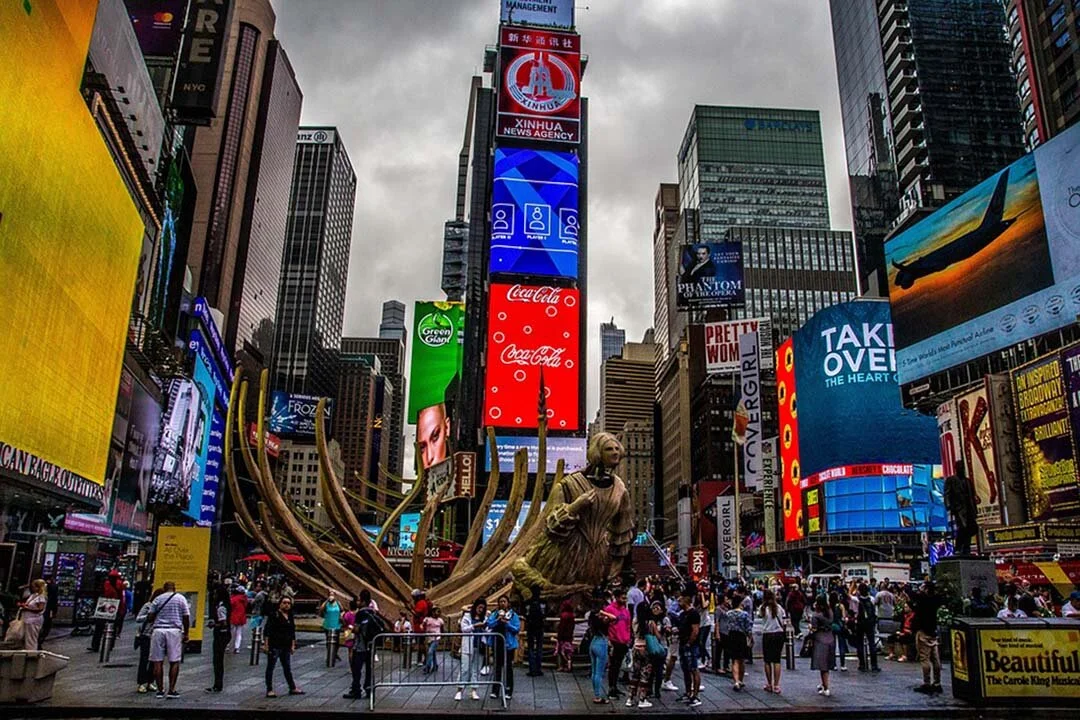
USA Guided Tours: New York City Must-Sees On and Off Broadway
February may not be the most popular month in which to visit New York City, but that’s good news for tourists who do take advantage of the cheaper flights because it means amazing opportunities that are unavailable at any other time of the year.
February may not be the most popular month in which to visit New York City, given it’s in the middle of winter. Tourists who do take advantage of the cheaper flights, however, will find many amazing opportunities unavailable at any other time of the year. In fact, there’s so much going on that you’ll want to visit the most iconic sights — the traditional “must-sees,” if you will — as quickly as possible to fit everything in. That’s where USA Guided Tours New York bus tours comes in!
With our award-winning daytime, evening and custom private tours, we take you to many of the famous Big Apple landmarks in just a day or evening. Enjoy our complimentary bottled water in our heated buses as our tour guides give you all the details on each neighborhood and sight you visit, from Wall Street and the nearby World Trade Center complex to Madison Square Park under the sleek Flatiron Building. Unlike other New York bus tours, USA Guided Tours’s guides hop off with you at each stop in order to give you all the history and fun facts you need to become an NYC expert!
You’ll never waste time catching cabs, running to grab the subway, or waiting endlessly for the next hop-on, hop-off shuttle in the frigid February air with USA Guided Tours. Our vans take you directly to each sight in Manhattan and Brooklyn, so that you spend most of your time seeing the Brooklyn Bridge and Central Park, rather than traveling between them.
Once you’ve seen Rockefeller Center, Chelsea Market, Trinity Church, and St. Patrick’s Cathedral on 5th Avenue with USA Guided Tours, then you can devote the rest of your trip to enjoying perhaps the best-kept secrets of winter in New York: Broadway Week (16 Jan – 4 Feb) and NYC Must-See Week (29 Jan – 11 Feb). Both festive events offer 2-for-1 tickets so that you can bring the whole family for less!
During Broadway Week, catch some of the most iconic musicals on the Great White Way, from The Phantom of the Opera to Kinky Boots and Wicked. A few plays also qualify for Broadway Week’s deal, including Uma Thurman’s star turn in The Parisian Woman — written by Beau Willimon, creator of Netflix’s House of Cards — and John Lithgow’s one-man show, Stories by Heart.
The slogan for NYC Must-See Week is “burn through your bucket list,” and the laundry list of participating museums, shows, and attractions reveals why. Like art? Grab 2-for-1s to the Whitney Museum of American Art, the Guggenheim, MoMA, and the Brooklyn Museum. Into architecture? Tour some of the City’s most famous buildings, from Carnegie Hall to the Empire State Building, Madison Square Garden, the United Nations, and NBC Studios at 30 Rock. If it’s history you care about, be sure to visit the 9/11 Tribute Museum — near the 9/11 Memorial that we stop at on our daytime NYC guided bus tour — the Intrepid Sea, Air, & Space Museum on the docked aircraft carrier, the Morris-Jumel Mansion (the oldest house in Manhattan), and the Museum of the City of New York.
With 2-for-1 on all of these deals, you’ve got to take advantage of this opportunity as much as you can. So, see the usual “must-sees” with our quick but jam-packed USA Guided Tours guided bus tours, and then jump on these excellent deals to have a truly wonderful NYC vacation!

Browse by Tag:
- Women's March
- Shadow Dragon
- Whole 30 Diet
- Broadway
- New York City
- Unsolved Mysteries
- Professional Life
- Healthy Living
- Agriculture
- Poetry
- Inflammatory Bowel Disease
- USA Guided Tours
- Blog
- Drawdown
- Research Article
- Musings on Life
- Activism
- Higher Education
- Portfolio
- Family Planning
- Mythical Tales
- True Crime
- Climate Change
- Mass Incarceration
- Nerdy Things
- Sonnets
- Fantasy
- Music Reviews
- Short Stories

Marching Steps Addendum: Unintended Impacts of the Pink Pussy Hats
Perusing my Facebook feed this morning, I came across another post by Tamela J. Gordon, author of one of the critiques of pussy hats to which I linked in my last post. It’s titled “9 Things Other Women Who Love Pussy Hats More Than Black Women Say.” You should read it here.
Perusing my Facebook feed this morning, I came across another post by Tamela J. Gordon, author of one of the critiques of pussy hats to which I linked in my last post.
It’s titled “9 Things Other Women Who Love Pussy Hats More Than Black Women Say.” You should read it here.
No, seriously. Read it. Now.
I’ll wait.
*
Gordon is blunt. She’s angry. She’s writing to warn black women:
“If you doubt that one of your pussy hatter friend’s [sic] would choose the pussy hat over you, tell them you think pussy hats are exclusionary, no matter what color they are.”
Then she prepares them to handle the likely answer:
“Brace yourself.”
Each response in the list that follows is important, but #1 stood out: “I’m going to wear the pussy hat and I don’t care what anyone says!”
I didn’t actively think this on Saturday, but I acted it out. I wore my pussy hat, and I therefore didn’t care enough about the fact that many women find it exclusive to take it off.
(Mandatory disclaimer: I’m not saying that my thoughts represent every pussy hat wearer. I can only speak for myself, albeit not as articulately or accurately as I would like most of the time.)
I reflected a lot about my experience reading Gordon’s piece as I read it. Was I feeling defensive? Was I upset? Was I angered by what she said?
I am as rubbish as most people when it comes to formulating responses before I finish listening to (or reading) someone — no better an active reader than an active listener. All the same, I was able to hold off my reaction for the most part until I finished:
“Woah. She’s right. Point taken and received.”
I come here to acknowledge my mistake, not to highlight how woke I am to withstand such criticism. (I have also come here to make a shitty allusion to Antony’s funeral elegy for his friend and mentor in Julius Caesar.)
I should not have worn the pussy hat. I’m not going to beat myself up for doing so; I’m going to take that critique to heart. The only acceptable response is to acknowledge my mistake and then continue to try and do better as an advocate for racial justice. So that’s what I’ll do.

Browse by Tag:
- Women's March
- Shadow Dragon
- Whole 30 Diet
- Broadway
- New York City
- Unsolved Mysteries
- Professional Life
- Healthy Living
- Agriculture
- Poetry
- Inflammatory Bowel Disease
- USA Guided Tours
- Blog
- Drawdown
- Research Article
- Musings on Life
- Activism
- Higher Education
- Portfolio
- Family Planning
- Mythical Tales
- True Crime
- Climate Change
- Mass Incarceration
- Nerdy Things
- Sonnets
- Fantasy
- Music Reviews
- Short Stories

Marching Steps: An Ever Evolving Journey in Showing Up for Change
A year ago, I tentatively stepped out of the yoga studio where I work in downtown Asheville and walked into a sea of pink hats (including mine), signs, and cheers. That morning, my mother expressed fear that I would be walking into some melee out of the 1999 WTO protests in Seattle.
A year ago, I tentatively stepped out of the yoga studio where I work in downtown Asheville and walked into a sea of pink hats (including mine), signs, and cheers. That morning, my mother expressed fear that I would be walking into some melee out of the 1999 WTO protests in Seattle.
But the march was peaceful, positive, and felt full of purpose. So did I.
What a difference a year makes.
Not in the way that you might expect: I went to the march, wore my pussy hat, even made a sign this time, and everything was peaceful and positive. But I write these words after a year of more activism than in my first almost-four decades combined, and I therefore arrived at this anniversary march more deliberate, nuanced, and experienced when it comes to showing up.
I had a lot of time to reflect during the march, mainly because the speakers couldn’t be heard by a majority of us due to the poor PA system. I was also near the rear of the line, so I had a lot of time standing still as we waited to funnel through gates and onto the sidewalk, having been denied the use of the road this year.
I thought back to everything I’ve participated in since January of last year. Galvanized — or shamed — into action after the shock of the election, I started attending weekly Showing Up for Racial Justice (SURJ) meetings, eventually joining the core organizing team in March. Simultaneously, I started volunteering once a week at the center that houses our local sexual and domestic violence organizations. More recently, I have joined the fundraising team for our local sanctuary movement helping those members of our community affected by our current draconian and predatory immigration policies.
Compared to what I used to do, these steps are massive. Compared to what I could be doing, they are middling. (I originally wrote “minimal,” but to my relief, that’s not accurate.) I have learned so much through this past year, including how much more I’m capable of in certain areas than I had ever imagined. I have also whiffed on so many opportunities to show up.
In fact, you could say I whiffed just by showing up today in the way I did. A good friend of mine, an abundance coach and committed activist, posted on Facebook urging us to leave our pussy hats at home, since many women felt excluded by what the hats implicitly and even unintentionally stand for: a cis-gendered, white way of being a woman. (You can read a different perspective here.) I felt bummed; I really wanted to wear my pussy hat! I added my Black Lives Matter pin, and I chose a quotation from Martin Luther King, Jr. for my sign, but I tried to interrogate why I wanted it on my head so badly as I walked from the studio to the gathering place.
I think it was so that I could feel included; my heart soared at the sight of many other women and men walking to the marching field, signs held and hats donned. I wanted to feel included in the community circumscribed by our hats, just as I wanted to be a part of the broader symbolism these hats convey — or, at least, the inclusive parts. It would have been so easy to take it off once I got at the march, but I didn’t. I guess part of me would have felt dumb for doing so, as if anyone cared what I did with a knitted bowl of pink acrylic on my head.
It was a good reminder, though, that it’s hard to get this showing up stuff right. We’re always potentially doing something that excludes others. I considered this from another angle during one of the few speakers I managed to hear: a progressive woman running for Congress — as a Republican.
As you might imagine, there were less applause and more confusion — specifically because everything she said she supported sat fully within a progressive platform. (Having looked at her website, she’s conservative on gun control and is concerned about any taxes that penalize marriage.) I also wondered what she was doing there.
Had we had no women of color speaking, I would have been intensely critical. I’m still not sure we needed to give her much time compared to other voices that aren’t heard often, but there are few examples as close to Daniel in the lion’s den as a Republican — no matter how progressive he, she, or they claims to be — at a progressive march in a blue city. If the march organizers had tolerant inclusivity in mind, then a Republican running for Congress is about as “they go low, we go high” as you can get.
On the way down from the stadium at which we gathered to the sidewalk march route, I thought again of my pussy hat as I saw an African-American man selling them. At the time, I had found myself next to an African-American woman whose pussy hat was black. I was tempted to ask her how she felt about the pink pussy hats, but I felt like I would be imposing. On the other hand, I would have given her a voice and taken the opportunity to listen.
This brief moment, when class, race, and feminism imperfectly intersected, showed me how complicated the negotiations of activism can be. Learning how to show up means putting people first, and people are difficult. Or, rather, relating to and with people are difficult, because relationships are beautiful and intense and a ball of knots and painful and downright toxic and bewildering and bewitching. Which is to say that they’re not is easy, and we’re always screwing them up and letting people down. Even and especially those people we care about, those whom we love the most but sometimes understand the least.
I saw this in a more concrete way when a few older white women and men around me half-seriously advocated that we move from our allotted place on the sidewalk and spill into the street. After all, what could the cops and cars do?
My immediate, unspoken rebuttal was to imagine exactly who would be at risk of getting arrested if we did such a thing; it almost certainly wouldn’t be the older white women in the pussy hats. In a moment of wanting to show up (and, to be fair, to keep moving), they didn’t recognize the privilege in being able to think about doing such a thing without fearing serious, even harmful reprisal from the authorities.
My second thought was to wonder if the sidewalk rule stemmed from Heather Heyer’s murder in Charlottesville and was in part a desire to protect us marchers at best or, at the very least, to escape notoriety and liability.
I do not know the reasons we could only march on the sidewalk, so I don’t know if I agree with them or not. Yet, there was something inspiring about the two lines of pink-wearing, sign-waving people shuffling at museum-going speed: two parallel lines like a giant equal sign (the symbol of the Human Rights Campaign), or two binaries that ultimately converged into a fluid mass at the end of the march, symbolizing the ways in which we can dismantle the black-or-white dichotomies so loved by the patriarchy and instead come together as a multi-faceted and misshapen (in the best of ways) community. Stronger together, indeed.
All this is to say that I’m glad I went not only because of the ways in which I felt re-galvanized and heartened by a community who, for the most part, share my values and beliefs about the world but also because of the ways in which I felt challenged, the ways in which I stumbled, the ways in which showing up here made me question exactly how much good I was doing by showing up.
I ultimately chose to go because I felt it was important to send the message that we’re not going away, and we’re actually showing up more than ever before. Rather than an MLK, Jr. quote, my sign probably should have read: “I acknowledge how problematic this march is even as I show up, because I am someone who recognizes the imperfections in everything I do to try and make the world a better place.” Or, more succinctly, to borrow from a SURJ core value: “Take Risks, Make Mistakes, and Keep Going.” I took a risk in showing up last January; I might have made a mistake by showing up today; but above all, I keep going.
Browse by Tag:
- Activism
- Agriculture
- Blog
- Broadway
- Climate Change
- Drawdown
- Family Planning
- Fantasy
- Healthy Living
- Higher Education
- Inflammatory Bowel Disease
- Mass Incarceration
- Music Reviews
- Musings on Life
- Mythical Tales
- Nerdy Things
- New York City
- Poetry
- Portfolio
- Professional Life
- Research Article
- Shadow Dragon
- Short Stories
- Sonnets
- True Crime
- Unsolved Mysteries
- USA Guided Tours
- Whole 30 Diet
- Women's March

USA Guided Tours: The Pure Magic of Christmas in New York City
This holiday season, give yourself the gift of a great time and visit New York City! Its common knowledge that the Big Apple does the holidays better than anywhere else in the country. Don’t worry, we created a must-see itinerary just for you!
This holiday season, give yourself the gift of a great time and visit New York City! Because the Big Apple does the holidays better than anywhere else in the country, your must-see itinerary almost doubles thanks to all the amazing events and sights. Let us at USA Guided Tours show you the best of New York City’s famous landmarks in our packed yet relaxed daytime and evening bus tours so that you can fit in all the extra holiday cheer!
When you join us on our “Discover NY” daytime bus tour, you’ll experience a smorgasbord of landmarks, from historic buildings like Federal Hall and the Flatiron Building to festive neighborhoods like Little Italy and Chinatown — and who can forget Central Park? Be ready to be wowed on our evening NYC guided bus tour, “Big Apple in Lights,” as the City shines even brighter on December nights, from the glow of Times Square and the Columbus Circle Holiday Market to the decorations in Chelsea Market and Grand Central Station.
Once you’ve seen the City’s most popular year-round landmarks with our NYC guided bus tours, you can turn your attention to a holiday-specific checklist. Start with a fan favorite since 1933: the Christmas Spectacular at Radio City Music Hall, featuring the famous Rockettes. You’ll be amazed by the precision of their choreography — not to mention the height of those leg kicks! If you prefer classical music, the New York City Ballet’s performance of The Nutcracker features all 90 dancers in the company and a one-ton Christmas tree that shoots upward to a height of 40 feet.
Since we at USA Guided Tours have shown you the best of Manhattan and Brooklyn, consider a trip to the Bronx for the Holiday Train Show at the New York Botanical Gardens. Over 150 NYC landmarks are created in miniature from bark, leaves, and other plant material, as model trains zip over, under, around, and through the sights on nearly a half-mile of track. It’s an amazing and joyous piece of art, and children and adults alike will love seeing the Empire State Building, the Brooklyn Bridge, and even the Statue of Liberty literally come alive!
Even our museums get into the holiday spirit. Check out “Charles Dickens and the Spirit of Christmas” at the Morgan Library, where you can see the the original manuscript of “A Christmas Carol” and explore the sources Dickens drew upon when creating timeless characters like Ebenezer Scrooge and Tiny Tim.
Finally, you have to view the famous holiday windows at Bergdorf Goodman and Macy’s: the elaborate displays will take your breath away! This year, Bergdorf has chosen the theme “To New York With Love,” with each of the 7 colorful windows capturing the essence of beloved cultural institutions like the Botanical Gardens and the American Museum of Natural History.
Then, walk down 5th Avenue — sipping a hot cocoa — to Macy’s in Herald Square to see its theme, “The Perfect Gift Brings People Together.” When there, don’t forget to visit Santa! Santa Land is an over-the-top holiday extravaganza and especially exciting for the kids. Reservations are required, and even then you wait in line. Where better to wait, though, than Macy’s? Have your friends or family hold your spot in the line while you finish your Christmas shopping!
The ultimate gift, though, won’t come in stores: spending the holidays in New York City with us at USA Guided Tours! So come on over and let us make your season bright!

Browse by Tag:
- Women's March
- Shadow Dragon
- Whole 30 Diet
- Broadway
- New York City
- Unsolved Mysteries
- Professional Life
- Healthy Living
- Agriculture
- Poetry
- Inflammatory Bowel Disease
- USA Guided Tours
- Blog
- Drawdown
- Research Article
- Musings on Life
- Activism
- Higher Education
- Portfolio
- Family Planning
- Mythical Tales
- True Crime
- Climate Change
- Mass Incarceration
- Nerdy Things
- Sonnets
- Fantasy
- Music Reviews
- Short Stories

Oversaturation: True-Crime Fatigue and Searching for That Spark
I didn’t think it was possible for me to reach true-crime fatigue, but I think it’s happened. (Note that this hasn’t stopped me from listening to true crime podcasts or watching true crime shows on YouTube in the slightest; I just do so half-heartedly, my attention wandering as if a fly keeps buzzing around the room.)
I didn’t think it was possible for me to reach true-crime fatigue, but I think it’s happened. (Note that this hasn’t stopped me from listening to true crime podcasts or watching true crime shows on YouTube in the slightest; I just do so half-heartedly, my attention wandering as if a fly keeps buzzing around the room.)
I’ve even lost interest in watching the newly-released reruns of my favorite show of all time: Unsolved Mysteries, hosted by Robert Stack. (To be fair, I watched at least the first six seasons before I became distracted and lost interest.)
Not that I’m worried, per se; mine is a mind that obsesses long and deep about something — the Beatles, the Kennedys, Beck, golf, baseball, Christine Chubbuck, British history — for a sustained period and then drops it, sometimes for a while, sometimes forever. Even this blog: I’m excited when I feel I have something to say . . . until I don’t. And as someone who taught writing at both high-school and university level, I’m not used to musings without a point.
If there’s a point here, it’s one of over-saturation and the difficulty of digging yourself out of that deep, obsessive hole. I’m ready to be obsessed with something again; in fact, just a few weeks ago, it was the Kennedys, thanks to an amazing biography of Bobby Kennedy, Larry Tye’s Bobby Kennedy: The Making of a Liberal Icon. I even checked out the 2003 JFK biography by Robert Dallek, mostly because I was interested in the historian’s take on JFK’s medical records; as someone who’s had a chronic illness since 10, I’m always interested in how people manage chronic pain and illness, and handsome Jack Kennedy had more of his share and almost medieval medical treatment, given their poor understanding of drug side effects and his ailments.
Yet, that biography sits on my bathroom sink, and I’m stuck less than halfway through.
I want a spark, something to light my fire again in that way my friends talk about: the way in which I can get buried so deep that my passion for a subject sweeps people along like a flood. My flint is damp, though, and unresponsive. Yet, I keep half-listening to true crime podcasts (my current one is Unresolved, even though I’ve heard over half the cases the host covers), half-looking for “you know, that — that thing.” At least I’ll know it when it comes.

Browse by Tag:
- Activism
- Agriculture
- Blog
- Broadway
- Climate Change
- Drawdown
- Family Planning
- Fantasy
- Healthy Living
- Higher Education
- Inflammatory Bowel Disease
- Mass Incarceration
- Music Reviews
- Musings on Life
- Mythical Tales
- Nerdy Things
- New York City
- Poetry
- Portfolio
- Professional Life
- Research Article
- Shadow Dragon
- Short Stories
- Sonnets
- True Crime
- Unsolved Mysteries
- USA Guided Tours
- Whole 30 Diet
- Women's March
Current Music Obsession: 80s Grunge Band, Mother Love Bone, Apple
I’m listening to “This Is Shangri-La” [sic], the first song — and currently my favorite — on Apple, the debut and only album from the flicker of a shooting star that was the late-80’s Seattle glam-grunge band Mother Love Bone.
I’m listening to “This Is Shangri-La” [sic], the first song — and currently my favorite — on Apple, the debut and only album from the flicker of a shooting star that was the late-80’s Seattle glam-grunge band Mother Love Bone.
I’m writing this post in less than optimal conditions: an awesome song is blasting on repeat through my cheap but good purple earbuds. It’s not easy to think when nodding your head energetically to a rock rhythm, bouncing your feet in time, and occasionally pulling your hands from the keyboard to join the seated dance party. It’s easier, though, than turning the song off.
If you’ve heard of Mother Love Bone, it’s usually for one of two reasons.* 8 times out of 10, it’s for the untimely death (understatement) of their cherubic, charismatic frontman Andrew Wood from a heroin overdose days before Apple was released, on March 19th, 1990.

Wood’s death permanently transformed the Seattle music scene. Two members of Mother Love Bone, Jeff Ament and Stone Gossard, became founding members of Pearl Jam (the second reason people usually have heard of Mother Love Bone). Chris Cornell, Wood’s roommate and lead singer for Soundgarden, penned and recorded a series of tribute songs with Ament, Gossard, and others as Temple of the Dog. The result was a one-off eponymous album so successful that the members will tour this year for the 25th anniversary of its release. During the recording of “Hunger Strike,” the band’s most popular song, a guy visiting from California to audition for Ament and Gossard chimed in the perfect vocal counterpart to Cornell’s higher-pitched lines. His name? Eddie Vedder. Even when dead, Andrew Wood created amazing music.
Most people accurately describe Mother Love Bone as a bridge between glam rock and grunge. The former genre had declined from its peak in the mid-70’s into a factory belt of eyelined, poofy-haired, lipsticked feral boys bashing chords, jumping around with mics, and focusing more on looking good than writing good songs. Lyrics typically bulged with bad sex metaphors. Grunge was in its infancy, but it differed from glam in two main ways. First, its lyricists — Wood, Cornell, Vedder, Kurt Cobain, et al. — unapologetically chronicled their disaffection and alienation with life, broaching topics from suicide (“Jeremy”) to mental illness (“Lithium”) and drug addiction (Alice in Chains’s Dirt). Second, the music channeled punk, metal, and glam, resulting in thicker chords and fewer noodling guitar solos that go to eleven.
Mother Love Bone, however, combined the best of both, in every way a trendsetter. The band was a marriage of complimentary contrasts. You had grunge wallflowers like Ament and Gossard: weedy bodies with noncommittal medium-long hair hidden by a bandana. Then, you had Wood’s Freddie Mercury-like alter ego, Landrew the Love God. A name partly inspired by a Star Trek episode, Landrew preached “Love Rock” in his powerful, Southern-inflected voice. In the serviceable 2005 documentary Malfunkshun: the Andrew Wood Story, Cornell described Wood as “the only real rock star I think I’ve ever met.” See photo at left for Exhibits A-Z.
He’s beautiful, of course: chest-length blond hair, creamy skin, sumptuous lips a plastic surgeon would frame in her office if she sculpted them. He also had a fashion sense that you need a love of the absurd and a superhuman ability not to give a fuck to pull off. It’s impossible to look at Wood and not want to know more.
As angelic as Wood looked, however, he had demons. He had started abusing drugs and alcohol at 12. Notes from one of his stints in rehab and quoted in Malfunkshun indicate that he was abusive to girlfriends. His mother explains in the documentary that violence and love were inextricable in their home, and friends recall seeing both Andrew and his fiancée Xana La Tene bruised after fights. Why he abused substances and why he hid pain and self-loathing with his gorgeous, seductive stage persona is clear. He didn’t hide it:
Get me to the stage
It brings me home again
This is Shangrila
I’m trippin’ on it now
It brings me home again
This is Shangrila
Had “Landrew” been able to stay on stage every minute of his life, preaching Love Rock and receiving it in mega-doses from a Seattle audience that had made Mother Love Bone the biggest homegrown draw in the city, he might have made it. Heroin was a mere placeholder for the hours until he could get back on stage.
It’s worth noting, too, that two unfortunate circumstances colluded to turn what might have been just another relapse into a fatal overdose. Four people, including Wood, ended up in the hospital that weekend having overdosed on heroin, leading to speculation that a bad batch had hit the streets. More importantly, he had been steadily improving over the first two days in the hospital. As Malfunkshun reveals, 10 hours of hospital notes are missing from Wood’s chart. Within those 10 hours, Wood, whose “condition [was] hopeful” enough that he was taken off paralysis medications became “unresponsive,” with “no reflex, no signs of brain function.” I have no doubt at least one mistake was made. Without more information, it’s impossible to know whether Andrew would have survived even if medical malpractice hadn’t happened. The whole scenario reeks of a near-miss in so many ways.
Laments abound about “What Might Have Been” with Wood. It’s especially distressing to hear “Landrew” sing “I don’t believe in smack / So don’t you die on me / Don’t you die on me, babe,” knowing that his lack of faith didn’t protect him. Here is where we might conclude that we were lucky to have as much as we did of Wood and his music. That’s fair. It’s also too generic for someone like Wood. I’d rather not conclude at all, except to acknowledge how magical he continues to be a quarter-century after he left us.
*A fan of sports, I find it far too disconcerting to write “MLB” without thinking of division races, wild cards, and those dumb champagne goggles.
Browse by Tag:
- Activism
- Agriculture
- Blog
- Broadway
- Climate Change
- Drawdown
- Family Planning
- Fantasy
- Healthy Living
- Higher Education
- Inflammatory Bowel Disease
- Mass Incarceration
- Music Reviews
- Musings on Life
- Mythical Tales
- Nerdy Things
- New York City
- Poetry
- Portfolio
- Professional Life
- Research Article
- Shadow Dragon
- Short Stories
- Sonnets
- True Crime
- Unsolved Mysteries
- USA Guided Tours
- Whole 30 Diet
- Women's March

Scary Stories to Tell in the Dark: Ghosts Debut on Unsolved Mysteries
When we think of UM’s paranormal segments, the UFO stories are the most notorious. But the show began its lucrative (in the form of ratings) investment in the supernatural with ghosts.
When we think of UM’s paranormal segments, the UFO stories are the most notorious. But the show began its lucrative (in the form of ratings) investment in the supernatural with ghosts.
My love for ghost stories began when I discovered two cultural touchstones of an 80’s childhood: Unsolved Mysteries and the Scary Stories to Tell in the Dark series. I won’t say much about the latter here, except to point out that the books have the most frightening illustrations I’ve ever seen.
Snuff films, I’d imagine, have nothing on those full-page, black-and-white sketches of grotesque yet skeletal figures and nightmarescapes. They scared me so badly that I often had to cover them with a sheet of paper just to read the stories. (Look here if you don’t believe me. And don’t blame me when you have nightmares tonight.)
I have never experienced anything remotely ghostlike, bar one possible time in high school. I heard my mother open the remote-controlled garage door to return from work, and, since my ears were peeled for that sound, I shut off the TV, or stopped doing whatever else it was that I didn’t want her to know about. As I picked up my homework where I had left off like any dutiful daughter, I waited for her to walk through my door and say hello. The minutes continued to tick by . . .
. . . until, more than an hour later, I witnessed the garage door slide open for the first time that afternoon and my mom swing her car into the empty space. To this day, I don’t know what it was I (thought I) heard.
The truth is, I don’t think I gave a shit about ghosts until I read Scary Stories, and I didn’t believe they were (maybe?? please please please let them be???) real until Unsolved Mysteries came along.
When we think of UM’s paranormal segments, the UFO stories are the most notorious. But the show began its lucrative (in the form of ratings) investment in the supernatural with ghosts. If Amazon Prime’s episode guide is correct, the first paranormal segment was about purported hauntings on the Queen Mary, the luxury ocean liner active in the 30’s to the 60’s.
It’s one of my favorite ghost segments, thanks to one particular scene: a dramatization of a sighting a female maintenance supervisor and her male colleague claimed to have witnessed in the first-class pool. The whole UM segment was filmed on the ship, giving it that extra frisson of luxurious authenticity. The supervisor, Kathy Love, describes how she and her co-worker had heard invisible children giggling and saw the water in the pool splash — and splash the water does on screen, although no one’s there to do so. Then — and this is the tour de force — small, wet footprints materialize on the pool deck, as if one of the children playing in the water had jumped out to head to the locker room to change.
Even now, I’m impressed with the quality of the production value — although, given how little I know about producing special effects, I’d be impressed with anything beyond someone moving sticks attached to wet footprint-shaped sponges.
It’s one of the most memorable scenes I’ve ever seen on Unsolved Mysteries, and that’s saying a lot; I’ve watched a lot of Unsolved Mysteries episodes, and I have a good memory.
What I find fascinating about the segment now is how comprehensive and earnest an investigation UM gave its first foray into the paranormal. The tone of scientific objectivity is established with Robert Stack’s opening commentary, filmed on the deck of that infamous (to me) first-class pool. It’s the fourth episode of the first full season — which means it must have been 1988 — and Stack’s monologue acknowledges, in the politest words possible, that the whole thing could be bullshit:
How do we explain these sightings from reportedly well-balanced, level-headed people? Could they simply result from the power of suggestion, stimulated by an eerie location? Some parapsychologists believe that all locations are haunted — that is, they retain memories of past events that some people with psychic sensitivities or ESP experience as hauntings. Whatever the explanation, the Queen Mary seems to be inhabited by something ethereal . . . that has been seen — and heard — but not explained.
Stack may sound even-handed, but his words are an anachronistic lesson in shade. These “well-balanced, level-headed people” — including Kathy Love, with her story of the Phantom Pool Child — are only “reportedly” so. And, as logical an explanation as “the power of suggestion, stimulated by an eerie location” seems, the phrase not-so-subtly implies that most people are not susceptible to such “stimulat[ion].” It’s reminiscent of how western women had, for centuries, been deemed to suffer from “hysteria” whenever they appeared anxious, passionate, or any number of “too much” emotions that unsettled the men seeking to control them.
The sightings and sounds on the Queen Mary that the segment dramatizes vary widely, reflecting the decades and acres over which the ship ferried the well-to-do (1,001 times across the ocean, according to Stack). A woman sporting a 1940’s-era pale pink dress and brunette Victory Rolls sits at a table in one of the many dining rooms, only to vanish after a waitress brings her a cup of coffee. A black-and-white vision of an older, rotund woman dressed in a bathing suit appears, frozen in time and in a crouched position, forever waiting to cannonball into the aforementioned first-class pool.
Marine engineer John Smith — who started working on the Queen Mary after it had docked permanently in Long Beach, CA in 1967 — describes hearing “frightful” moans of stretched metal and men’s cries, along with rushing water, in the bow of the ship. He later linked these sounds to a tragic wartime collision between the Queen Mary — painted grey camouflage and nicknamed the “Grey Ghost” as it carried Allied troops to victory — had with a British cruiser named the Curacoa. slicing the cruiser in half and killing almost 300 of its men.
A former guide on the ship identified only as “Nancy Anne” tells a story about taking an escalator up from the lower decks only to notice a man in dirty blue coveralls behind her; when she reached the top and stepped aside to let him through, he had vanished. Only later did she learn that a maintenance technician had died in“Shaft Alley,” that so-called section near the engine room, after getting caught in one of the watertight doors in 1966. (Whether or not he re-materialized for Nance is another question.) She ends her interview by making it clear that she’s not one who easily gets caught up in such things: “I don’t necessarily believe any other ghosts stories that other people have come up with. I only know what I saw, and I only believe what I saw with my own eyes.”
To verify this bevy of sightings — or to explain them away — the producers bring in six uncredited psychics and two parapsychologists, Dr. William Roll and Tony Cornell. From the beginning, Roll and Cornell distance themselves from the reputation that precedes their professions. Roll maintains that he “cannot answer” the question of whether or not the ship is haunted even after the investigation concludes. Cornell, for his part, declares in a lilting English accent that “I am a skeptic” before admitting that, despite his reservations, “I must allow for the fact that other people, who are very sane and sensible, have seen things and experienced things.” The segment shows both men in various states of expertise, setting up surveillance and recording equipment or organizing the psychics as they prepare to walk through the ship. Shadowy, silhouetted shots of the — mostly female — psychics are taken as they individually wander the ship, gathering impressions.
In tune with the broader experimental brio of the segment is a debriefing between Roll, Cornell, and the psychics that has all the gravitas of an important business dinner, or even a war room session. Stately tall lamps emit a dull yellow glow that illuminates the white-clothed round table at which the investigators sit. The carpet underneath has a scrolled pattern in yellows, browns, and creams, and a painting of two horses in similar colors towers over the empty fireplace of whatever first-class room the investigators are occupying.
The atmosphere is one of a group of professors debating a conference keynote speech long after the amateurs have gone home. Almost everyone at the table consults a notebook or paper packet, flipping through it as the group hears each psychic speak, like a committee going through an important report.
Stack’s voiceover admits that not all of the psychics sensed anything, although the segment only shows snippets of accounts that conveniently line up with the wartime collision and the worker who died in Shaft Alley.
In a statement that seems hard to believe, Stack also reveals that William Roll experienced a first in his 30 years of parapsychological investigation: hearing for himself an unexplained sound previously reported by a witness. To investigate further the disembodied conversation that he had heard, Roll left a voice-activated recorder deep in the bow’s bowels overnight.
“For most of the night,” Stack’s sonorous voice informs us as the steady hiss of speakers turned all the way up plays in the background, “this is what was recorded: nothing.” For two minutes, however, “the tape recorder picked up sounds where no sounds should be.” The results are strange vibrating bangs — gong-like echoes as if something was hitting the ship’s metal sides — as well a muffled melody reminiscent of a garbled PA announcement. Anticipating objections, Stack not only tells us that the bow had been sealed off for the night but also that the “researchers” couldn’t duplicate the sounds despite their best efforts.
For all these phenomena, neither Roll nor Cornell concludes that the ship is haunted; diplomatic as ever, these scientists simply acknowledge that more research is needed. “What we can conclude is that there is a physical source for the sounds” is the most that Roll will acknowledge, while Cornell says that paranormal phenomena “is a human experience. It’s gonna continue going on, and somebody’s gotta look at it.”
Stack’s closing words have even more bite than his opening ones, if that’s possible; this time, not only are the people who have reported sightings potentially prone to overreacting, but they are also perhaps schemers hoping to make a buck:
What can explain these hauntings? Overactive imagination? A quest for publicity?
But then, he pulls back on the skepticism:
Or [is it] something more intangible? Something . . . supernatural? Is the Queen Mary haunted? We cannot say yes . . . but we cannot say no.
With that equivocation ends UM’s first dive into the endless story pool of the supernatural, damp ghost footprints and all.
As ratings went up, the amount of hedging Stack provides as a preface to each ghostly segment went down. He never sounded as open to doubt again, although his intros also never insisted that ghosts or UFOs were real.
Browse by Tag:
- Activism
- Agriculture
- Blog
- Broadway
- Climate Change
- Drawdown
- Family Planning
- Fantasy
- Healthy Living
- Higher Education
- Inflammatory Bowel Disease
- Mass Incarceration
- Music Reviews
- Musings on Life
- Mythical Tales
- Nerdy Things
- New York City
- Poetry
- Portfolio
- Professional Life
- Research Article
- Shadow Dragon
- Short Stories
- Sonnets
- True Crime
- Unsolved Mysteries
- USA Guided Tours
- Whole 30 Diet
- Women's March
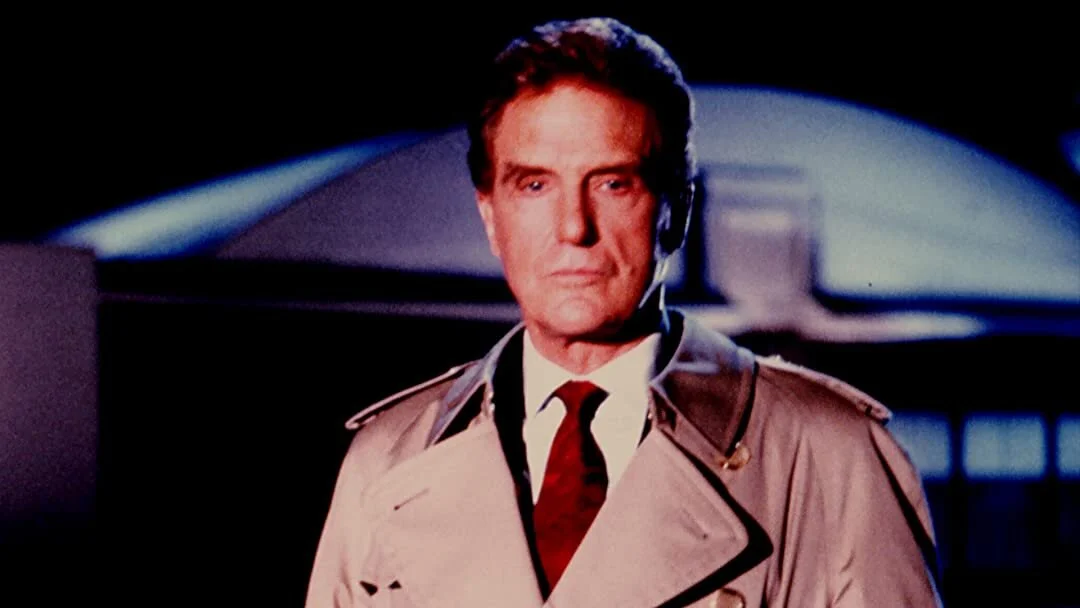
What You Are About to See Is Not a News Broadcast: Unsolved Mysteries
I’m permanently scarred by Unsolved Mysteries, my favorite thing ever committed to film. I mean that literally: thanks to Unsolved Mysteries, I have a scar — a near-perfect circle above my left eyebrow.
I’m permanently scarred by Unsolved Mysteries. I mean that literally: thanks to Unsolved Mysteries, I have a scar — a circular crater above my left eyebrow.
The year would have been ’87 or ’88, and I was seven-going-on-eight, a second grader in Mrs. Atkins’s class. I think it was autumn, although it might have been spring; it’s often impossible to tell the seasons apart in northeast Florida.
As television’s creepiest theme song blared from our boxy set, I was attempting to shelter under a blanket. Whenever an eerie twist of music or spooky turn of Robert Stack’s sonorous, grave voice seeped through the speakers, my terror would skyrocket if my back was blanket-bare.
That night, however, my attempts to burrow into safety weren’t working; my head kept dead-ending into still-folded sections of blanket that covered one body part but exposed another. As I frantically tried to get myself situated, like a kid who keeps missing the sheet’s head and arm holes in his DIY Halloween ghost costume, my hand sliced through the air. With one swift cut, my nails amputated a giant chicken pox scab on my face.
It was one of those Before and After moments in my life, the kind that are more devastating the younger you are and the sillier the event: I was convinced that I had uglified myself forever.
“Will it leave a scar?!?’ I wailed, temporarily suspending my fears of ghosts and murderers and con ladies who would trick me into giving them thousands of dollars to cast out demons. My mother lied to calm me. More soothing was the start of the program itself; for a solid hour, I forgot about my face and lost myself in UFOs, ghosts, fraud and conspiracy and murder cases. Like a giant bowl of macaroni and cheese, Unsolved Mysteries was the comfort food I needed to forget my sorrows. Thirty years later, it still is.
For anyone unlucky enough to have missed the greatest show ever made, Unsolved Mysteries was a weekly series that ran from 1987 to 2010 on various networks, starting with NBC before moving to CBS, then to Lifetime before ending its run on Spike. Its golden age was the first run on NBC, from 1987 to 1997. Each Wednesday night broadcast began with these words, printed in white on a black screen and read aloud by a somber voice:
This is a program about unsolved mysteries. Whenever possible, the actual family members and police officials have participated in recreating the events. What you are about to see is not a news broadcast.
On the face of it, there’s nothing ominous about those words, except the acknowledgment that you may be exposed to some bad amateur acting. Still, it’s clear that what’s about to come on your screen is out of the ordinary. These are unsolved mysteries: no spoilers here. The show is “not a news broadcast,” a qualifier that has the effect of making the whole affair less reputable but also less predictable.
Come to think of it, the phrase “[w]henever possible” has a sense of foreboding about it. When is it not possible? What’s happened to those actual family members and police officials to make them unavailable for a star turn on a primetime network show? (Primetime network shows still commanded respect back then.) What commitments could they not possibly reschedule? A swim meet? The championship game? An anniversary dinner? A(nother) death in the family?? Or, are they dead? If so, was it natural causes? Or were they silenced by people who don’t want the truth to get out? Maybe . . . they were abducted by aliens???????
This was the kind of thought spiral that regular watching of Unsolved Mysteries produced, especially in an impressionable kid like me.
The basic Unsolved Mysteries format was simple and effective: hour-long episodes (minus commercials) with 3–5 segments a piece. The various categories that prefaced each segment displayed the show’s range: ‘Suspicious Deaths,’ ‘Fraud,’ ‘Unexplained Death,’ ‘Murder,’ ‘Wanted,’ ‘Lost Loves,’ ‘Sci-Med’ (usually miraculous recoveries from critical injuries, thanks to a prayer circle or divine visitation), ‘The Investigators,’ ‘Final Appeal,’ ‘Lost Heirs,’ ‘Missing Persons,’ and the real draw: ‘The Unexplained.’ Each episode would include at least one paranormal feature and one ‘Lost Loves,’ in which family members would search for — surprise — missing loved ones: usually blood relatives lost through adoption.
If you want a cross-section of the 1980’s and 90’s cultural zeitgeist, just watch an original Robert Stack-hosted episode of Unsolved Mysteries, recently resurrected thanks to Amazon Prime (to apprehensive cheers). Take the ‘Lost Loves’ segments. Thanks to far healthier attitudes about children born out-of-wedlock, we don’t have vast numbers of adopted adults seeking to be reunited with their birth mothers and siblings, or vice versa, today. Even when the episodes aired, you could sense a far more forgiving attitude towards mothers forced by furious and shamed parents to sign away their babies, as well as increased recognition that (usually) well-intentioned social services were wrong to split up impoverished families struggling to get by in the Depression.
In the 80’s and 90’s, moreover, everything was blamed on Satanic cults, from the Son of Sam murders (a somewhat convincing segment, actually) to just about any suspicious death involving younger adults (less convincing). An example of the latter segment is an early one about the death of a Bay Area teenager at San Francisco’s Land’s End named Kurt McFall. After the authorities ruled his apparent fall off the cliffs a suicide, his father asked Unsolved Mysteries to feature the case, which he believed was a murder involving people his son had started hanging out with in the last years of his life.
And just who were these people? First, you had the Society for Creative Anachronism, which, according to its website, has been “dedicated to researching and re-creating the arts and skills of pre-17th century Europe” since its founding in 1966. In other words — and in the segment — the SCA is a bunch of young and not-so-young adults who like to dress up in medieval costumes, swing fake swords, and bang fake shields around. (The DIY costumes filmed in the segment are simultaneously impressive and adorable, like really good tinfoil origami.)
Then, there was the leader of a pagan worship group that Kurt also became involved with: a grey-haired middle-aged man with a debatable mustache and a bored monotone who called himself Caradoc, after a Welsh tribal chieftain in Roman Britain. Thanks to UM’s production values and mandate to make everything normal seem as unnatural as possible, “Caradoc” came off as completely sinister, his every action made shadowy and suspicious, when he was closer to nerdishly weird.
It’s heartbreaking to watch Kurt’s grieving father insist, citing debatable evidence, that there’s no way that his son could have deliberately or inadvertently caused his own death. One of Kurt’s longtime friends even states that “these types of organizations don’t make threats; they make actions.”
I cannot say for sure that Kurt McFall died of a suicide, an accident, or foul play — and, as many posters about the case on the Sitcoms Online message board attest, it’s possible that Caradoc was involved somehow. But I can say that the attitudes to the members of the SCA and the pagan group were rooted in a fear of anything non-conformist — think attitudes towards the Beatniks in the 50’s and 60’s — rather than any concrete evidence that these people were dangerous and thirsted for blood.
The Satanic cult hysteria, however, is just one remnant of a sometimes happier (for some) yet often more oppressive (for many) time. When I was a child, the ‘Unexplained’ segments on UFOs and ghosts were my favorite. I wanted to believe so badly in these supernatural events that I think I actually did — or learned how to believe as long as I didn’t question my lack of reasoning. Back then, like now, everything was a government conspiracy. Our shadow cabals, however, had nothing to do with faking school shootings and blowing up our own buildings in the name of foreign terror and everything to do with Roswell, NM and Little Green Men.
A few years after September 11th, I was studying in Scotland and attended a talk about the rising importance of angels as a symbol and metaphor after the attacks on the World Trade Center and the Pentagon. In making his point, the academic pointed out that UFO sightings had plummeted following 9/11. We humans always look for proof that the powerful are hiding things from the powerless — a symptom of the deep-rooted desire to believe that random events have a purpose and a design, to refuse to believe that one Lee Harvey Oswald or a bunch of nobodies from Saudi Arabia could launch national grief and global chaos. When I rewatch UM segments on the Rendlesham Forest incident or the Kecksburg incident (“incident” being code for UFO sighting), I long for a time when the scariest theories involved flying saucers and wide-eyed grey beings with slender fingers and oversized heads.
If that explains why Unsolved Mysteries is comfort food for my brain and psyche now, it does little to explain why I loved it so much at the time. At best, I can attribute it to a combination of factors. I love a good ghost story. I love a mystery, the magnetic pull of the unknown and the possibility it could be solved. And, even before my parents divorced and I developed a debilitating chronic illness, I had always felt a kinship with the darker side of life. I still remember sobbing with horror when a friend of my mother’s told us how darkly awful she had found Silence of the Lambs — which I had recently seen and which remains one of my top five favorite movies — because I was convinced I was morally bankrupt for having loved it.
Still, how many other kids loved those very same things and never got into this show with the fervor of a person who has just found religion? I suppose my adoration is as much an unsolved mystery as the show that inspired it. Or, to paraphrase Robert Stack said as he closed out a segment on the Shroud of Turin, perhaps I’m missing the point: for true believers in Unsolved Mysteries like me, it’s simply a matter of faith.
Next time, on Unabashed Unsolved Mysteries Fan: taking a closer look at ground zero for UM’s UFO segments, the Roswell segment.
Browse by Tag:
- Activism
- Agriculture
- Blog
- Broadway
- Climate Change
- Drawdown
- Family Planning
- Fantasy
- Healthy Living
- Higher Education
- Inflammatory Bowel Disease
- Mass Incarceration
- Music Reviews
- Musings on Life
- Mythical Tales
- Nerdy Things
- New York City
- Poetry
- Portfolio
- Professional Life
- Research Article
- Shadow Dragon
- Short Stories
- Sonnets
- True Crime
- Unsolved Mysteries
- USA Guided Tours
- Whole 30 Diet
- Women's March

Whole Infinity: Stupid Mistakes and Starting Over... and Over
My stomach aches, I’m a little nauseated, and I’m more than a bit depressed at the idea of starting my Whole 30 AIP over from scratch.
My stomach aches, I’m a little nauseated, and I’m more than a bit depressed at the idea of starting my Whole 30 AIP over from scratch: I just accidentally broke my Whole30 diet – on Day 12.
The culprit? A “basil balsamic vinaigrette” that, inexplicably, contained grapeseed oil. (Mea culpa for not asking, but still — grapeseed oil?!)
Excuse me for a moment while I release some emotion:

Nooooooooooooooooooooo!

Waaaahhhhhaaahhhhhhhaaaaahhhhhhaaahhh.

Waaaaaaahhhhhhh
(Ahem.)
I’m feeling these .gifs of increasingly failed limbs so deeply because my Whole 30 story has been one of starting over. I began the plan on October 1st, only to learn a week in that I wasn’t eliminating foods that pose trouble for people like me, who have an autoimmune IBD (inflammatory bowel disease). NB: grapeseed oil is okay on the regular Whole30, just not the Autoimmune Protocol (AIP).
So, I needed to extend the diet until November 7th, not November 1st. No big deal, right?
Right.
Then, late in the week of October 16th, I realized that the all-natural beef franks I ate for lunch over the last four days contained paprika. Paprika is a nightshade: a food available to regular Whole30ers but forbidden on the AIP. No wonder I had felt brain fog every afternoon.
Well, that sucks, I could make it to November 20th. No problem, right?
Mmmmm . . . okay. Yeah, I guess so. Fine.
Now, I’m starting over from scratch. November 2nd is the first day of my new month, and December 1st will be the day I start my elimination diet.
Oof.
As my stomach throbs and my guts twist like a towel someone’s wringing out, all I want is not to have to bother with this restrictive diet for another month.
Excuse me while I have another tantrum:

I want it to be over NOOOWWWW!!
Better.
Now that I’ve channeled my inner Jim Harbaugh, I see struggle ahead but also opportunities. (Not feeling those yet, but that’ll come.) I can now do a Whole30 AIP that incorporates some advice I read yesterday, about how AIPers should should eat a wide variety of veggies, oily fish about 3-4 times per week, and offal (which, yes, I consider awful. Har.). I’ve fallen into a lot of patterns since October 7th — kale chips and sweet potato fries on repeat — but I’ve been so focused on working around the foods I need to eliminate that I’ve neglected to explore the foods I can eat. If I fail to convince my taste buds — well, at least I gave it a shot.
Plus, I haven’t actually found the AIP to be as difficult as I envisioned. Until Halloween spurred a pitiful craving for Reese’s Peanut Butter Cups, Starburst, and those mini-sized Snickers and the like, I haven’t desired sugar. (Chocolate: occasionally. Sugar, no.) I now drink my tea black — a sentence I only thought I’d write in a short story. I prefer the greenest smoothies. I found cauliflower rice edible, and I suspect I might like broccoli rice more. I’ve also learned about two foodstuffs — grapeseed oil and paprika — that I should avoid in the future. And, while I don’t think I’m lighter, I’m definitely leaner. My skin’s clearer. I rarely get indigestion, an experience which, as someone with a chronic digestive disease, is a positive shock.
Starting over feels less a personal tragedy than a prolonged bummer.
But I am tired of thinking so much about food. I’m tired of denying every dinner invitation, because of the potential for screw-ups like the one that happened today.
I’m just tired.
Except that’s not true. I have a lot more energy now and very few peaks and valleys: no more 3PM sugar crash.
So I’m not physically tired, I’m emotionally tired.
Although, now that I eat three square meals instead of grazing all day, I’m not constantly thinking about whether I want or need another snack. I’m also making peace with the kitchen — I’ve never loved cooking — and am more willing to try new recipes.
The truth is, I’m peeved because I made a dumb mistake. I knew I should have asked for the ingredients in the vinaigrette before I ordered it. I didn’t, because I feared I would have to ask for something different, and I’m always afraid to ask for what I want.
I feared feeling my fear, yet I’ve just overcome a far deeper feeling: disappointment in coming to terms with starting over.
So . . . lemons into lemonade and all that. (I Can Haz Lemons! And Unsweetened Lemonade, But I’d Rather Have an Unsweetened Arnold Palmer.) Bootstraps pulled up, saddle ready for sitting, once more unto the breach.
Nerd Fitness, the company I’m so grateful to work for, has a cool online platform where its members can create characters and fulfill quests. I haven’t done that; often, setting up and checking in with a motivational tool drains my time rather than helping me make the most of it. It’s easier for me just to sit down and do the thing.
But, I think I’ll create a series of challenges to achieve in this next 30 days, my next and FINAL AIP journey (of 2016, at least).
I’ll try a dish of liver (n’ onions, probably). (Update: liver tried and somewhat enjoyed!) And maybe some awful [sic].
I’ll get the 20 seconds of courage to ask a butcher for bones to make a proper bone broth, instead of the kinda bony chicken stock I’ve been making.
I’ll print out and laminate the list of acceptable veggies and, at least once, try . . . 90 percent of them? 80%? How about 85%? Yeah, 85%. (Update: lamination completed!)
I’ll blog at least once about my experience.
I’ll economize my meal preparation and make batches of, say, sweet potato fries. (Unless they get soggy. Perhaps I’ll make batches of stew instead.)
I’ll focus on gratitude. Gratitude that I can choose to be on this diet. Gratitude that I have the resources to purchase well-raised meats and organic vegetables. Gratitude that I have built up enough self-love that I want this healing opportunity for my body.
Okay then. Reset button pushed (at least it’s not “restore to factory settings”). It starts tomorrow.
Browse by Tag:
- Activism
- Agriculture
- Blog
- Broadway
- Climate Change
- Drawdown
- Family Planning
- Fantasy
- Healthy Living
- Higher Education
- Inflammatory Bowel Disease
- Mass Incarceration
- Music Reviews
- Musings on Life
- Mythical Tales
- Nerdy Things
- New York City
- Poetry
- Portfolio
- Professional Life
- Research Article
- Shadow Dragon
- Short Stories
- Sonnets
- True Crime
- Unsolved Mysteries
- USA Guided Tours
- Whole 30 Diet
- Women's March

Ordered Eating, Whole 30 and Inflammatory Bowel Disease
When I returned from Camp Nerd Fitness in late September, I decided to “level up my life” and try the Whole 30 program, which has special rules, and may be especially beneficial, for people with Inflammatory Bowel Disease, like me.
When I returned from Camp Nerd Fitness in late September, I decided to “level up my life” and try the Whole 30 program, which has special rules, and may be especially beneficial, for people with Inflammatory Bowel Disease, like me.
For those of you in the don’t know, the Whole 30 is a program in which you eliminate potentially inflammatory foods for at least 30 days and then slowly reintroduce them to learn which ones affect your individual body.
The general guidelines for the elimination stage are:
No natural or artificial sugar
No alcohol
No grains, included gluten-free grains such as quinoa
No legumes
No soy
No carrageen, MSG, or sulfites
No “fake” muffins, cakes, breads, etc.
When I began the Whole 30 on October 1st, I had requested the Whole 30 bible, It Starts with Food (2012) from our state library system but hadn’t gotten it yet. Once I had book in hand, I learned that the authors, Melissa and Dallas Hartwig, suggest extra restrictions for those of us with Inflammatory Bowel Disease, which I’ve had in the form of ulcerative colitis since the age of 10. Because UC is an autoimmune illness, the Hartwigs also suggest that we UCers also adopt the autoimmune protocol (AIP). Here’s the added list of “no” foods:
No eggs for at least 90 days
No nuts or seeds (including oils and butters)
No nightshades (tomatoes, white potatoes, sweet and hot peppers, and various spices including cayenne and chili pepper, curry power, and paprika) for, again, at least 90 days
No coffee
My first reaction to this extra set of inflammatory foods to avoid was:


HELL. NO.
The first week had been overwhelming enough, and I had finally made a meal I enjoyed, baked salmon cakes and salad with “ranch dressing,” using three recipes from It Starts with Food. Now, that whole meal was off limits: the salmon cakes had almond flour and an egg, and the “ranch” dressing used homemade olive oil mayo (with egg) as a base. The hardboiled eggs I had made with my new Instant Pot had become a lunchtime staple, and eggs and veg for breakfast were making one meal a blessed no-brainer. It felt like summiting a mountain, only to be told to climb an extra peak in order for it to count.
I sped through the five stages of grief, however, and realized that, like it or not, I had no choice. If I wanted the full benefit of the Whole 30, I couldn’t self-sabotage the plan by eating potentially inflammatory foods during the 30 to 90-day “detox.” Plus, I’ve never really loved eggs for breakfast.
So, since Sunday the 10th of October, I’ve been on the Whole 30 AIP. I’m roasting a lot of vegetables to make [insert chosen vegetable here] chips, and I’m spending a lot on organic meat.
I’m also thinking a lot about the thinking I do about food. My life has been a history of disordered eating only recently relegated to the past. I was diagnosed with ulcerative colitis in 1990, when doctors knew a lot less about digestive diseases than they do now. As a result, my mother and I were handed a pamphlet of “NO” and “YES” foods by my pediatric gastroenterologists that read like a torture diet. Bullet-point list time again:
No raw vegetables
No pulpy fruits or berries
Nothing with “whey” (check your labels)
No dairy
No beans
No spicy foods
I still remember showing up for the birthday party of Lesley, one of my two elementary school best friends, shortly after my diagnosis. Lesley’s parents had ordered cheese and pepperoni pizza for the gaggle of girls. My mom dropped me off with a tupperware container ready for the microwave, filled with plain baked chicken breast (not even any salt, because the prednisone I was on made me retain about 10% of my body weight in water) and carrots cooked to limp parabolas instead of sticks. If you looked up the sad face in the emoji dictionary, that meal would be there as an example.
I desperately wanted that pizza. It smelled amazing, as most junk food is wont to do, but even stronger than the desire to taste it was the desire to be just like the other girls. I was painfully different, not only in the bathroom I visited up to ten times a day for up to 45 minutes at a time but also at the table with friends. I didn’t eat pizza for another 10 years.
In my early 20’s, my disease stabilized a bit, and I could expand my diet to include most dairy (pizza!) and fruits and a few raw vegetables and beans. In adolescence, I had the still chic thin frame of the malnourished. As I ate more things, I gained pounds. I came home from Philadelphia the summer after graduation determined to lose weight; I still remember sobbing to my mother as I uncontrollably stuffed a pint of Turkey Hill Neapolitan frozen yogurt down my throat, deeply unhappy about my extra weight and baffled at my mindless eating.
So began the plunge into socially motivated, rather than medically sanctioned, disordered eating phase of my life. In my mid-20’s to early 30’s, I starved (800 no-fat calories/day, getting down to as low as 87 pounds), binged the weight back (eating boxes of cereal at a time until I was sick to my stomach), obsessively counted calories (especially when apps like My Fitness Pal came along), and wasted SO MUCH psychic energy that I could have used improving my relationships, becoming a better writer, and being happier. My only longterm romantic relationships came in the brief period when I didn’t measure my self-worth by how righteously I had eaten that day.
I no longer practice disordered eating: a massive victory that I don’t acknowledge often enough. And I know I’m doing the Whole 30 AIP for the right reason: a hope that I may be able to use diet to reduce or even eliminate the immune-suppressing medication I’ve taken for decades, medication that has landed me in the hospital twice and carries a rare but serious risk of an untreatable lymphoma.
Nevertheless, I’m feeling the magnitude of being back on a restrictive diet. It’s not sadness, anger, or irony; rather, it’s closer to a slight strain with touches of bewilderment and insight.
T. S. Eliot expresses it best in “Little Gidding”:
We shall not cease from exploration
And the end of all our exploring
Will be to arrive where we started
And know the place for the first time.
I’m back where I started as a child, but with a quarter-century of experience behind me and far more compassion for my body and its limitations. Ordered eating: I like the sound of that.
Browse by Tag:
- Activism
- Agriculture
- Blog
- Broadway
- Climate Change
- Drawdown
- Family Planning
- Fantasy
- Healthy Living
- Higher Education
- Inflammatory Bowel Disease
- Mass Incarceration
- Music Reviews
- Musings on Life
- Mythical Tales
- Nerdy Things
- New York City
- Poetry
- Portfolio
- Professional Life
- Research Article
- Shadow Dragon
- Short Stories
- Sonnets
- True Crime
- Unsolved Mysteries
- USA Guided Tours
- Whole 30 Diet
- Women's March

Camp Nerd Fitness: An Unexpected and Strange New World
Three days ago, I returned home from Camp Nerd Fitness 2016, a 5-day gathering of self-selecting people who care about fitness and diet and who love various “nerdy” things from Star Wars and Lord of the Rings to video games and comics, and more.
Three days ago, I returned home from Camp Nerd Fitness 2016, a 5-day gathering of self-selecting people who care about fitness and diet and who love various “nerdy” things from Star Wars and Lord of the Rings to video games and comics, and more.
At Nerd Fitness, the motto is “Level Up Your Life,” and CNF is a crash course in that art. So, what exactly did I learn at Camp? Here’s a sample:
I learned that I need to widen my stance when squatting so that I don’t have as much of a problem supinating, or leaning on the outside of my feet.
I learned that we should be able to move each finger individually, but most of us — myself included — can’t. I then learned some exercises to make that dexterity possible in the future.
I learned how little I know about truly nerdy topics like “Video Game Soundtracks” at Team Trivia night and that I’m okay with that.
I learned how fun it is to dress up as the grunge princess I had always wanted to be in high school; I’m looking forward to figuring out more opportunities to show off a slip dress, paint-spotted flannel shirt, torn tights, and a bad attitude to go along with that paler face and smoky eye.
I learned how to row properly! I did not see that one coming but am excited about it.
I learned about nutrient-rich recipes I can eat if my chronic illness flares.
I learned that I need an Instant Pot, especially since I’ve committed to the Whole 30 program for the month of October. (The Bluetooth one I ordered is on its way.)
I learned my personal “power phrase” to use whenever I need courage to face a challenging moment. (No, I’m not going to tell you what it is.)
I learned an amazing Venn Diagram for figuring out how you might make a career out of something you love to do.
I learned that, as an extrovert, I can sometimes read introverts’ reserve as rejection when it’s not about me at all.
I learned, “Life is long. You have time.”
Learning is only the beginning. All of these insights, lessons, advice are really the foundations of “quests” — another NF term that I like because it stresses the journey as much as the arrival — to change my life for the better. So, if the above list is what I learned, here are the corresponding quests and practices to make those lessons stick:
I had previously squatted as much as 125lbs but was overextending my low back. So I’m starting over with just the bar. As I patiently practice nailing perfect form at the lowest weight until it becomes rote, I will widen my stance so that I don’t supinate.
I will practice some finger flexion or range-of-motion exercise daily, along with my growing list of other daily exercises (ball walkouts, burpees, hamstring curls on the ball, side planks, etc.).
I will continue to be okay with my lack of knowledge about video game soundtracks.
I will find excuses to go grunge princess again; after all, it’s back in style! And I’ll take the best part of that attitude — speaking truth to power, a refusal to care what anyone thinks, and a love for the best music of the 90s — and flaunt it.
I’ll keep rowing properly, even if it means that I now take 2 more minutes than before to row 2km.
I’ll make use of my Instant Pot and learn to make flavorful bone broth, my new go-to dish whenever I’m not feeling up to a fiber-rich meal.
I’ll use that power phrase (no, still not going to tell you what it is) on the daily so that I feel like a badass as much as possible. (Just used it now, in fact.)
I’ll keep filling in that Venn Diagram.
I’ll keep putting my friendliest face forward (unless it’s grunge princess time) while remembering that it’s not about me.
I’ll keep remembering that I have the time I need to build the future I want to live.
It’s incredible to see how much I learned at camp, while also knowing I could make this list twice as long.
Moreover, I haven’t even gotten to the most important part: the support and love that the campers, staff, headmasters, and volunteers effusively brought with them.
I have NEVER seen a group of people so willing to listen to and support people as they bravely let their vulnerabilities show. As I reflect on my experience, I realize that, as an extrovert who occasionally needs solitude, I reined myself in this past week. I wanted to give space for others who needed to hear themselves speak more than I, and I also found that I wanted some time to myself each day to think (and to do my French and German lessons). I therefore didn’t get to meet as many people as I might have.
Thanks to the Facebook group, though, I know I can can connect at any time and receive the same support and encouragement I witnessed and received at camp. Those relationships, too, are only at the beginning stage, and of all the quests, the one that matters most is to be as supportive, open, excited, encouraging, honest, courageous, and vulnerable as my fellow campers. It’s a quest that begins with this blog post dedicated to them.
Browse by Tag:
- Activism
- Agriculture
- Blog
- Broadway
- Climate Change
- Drawdown
- Family Planning
- Fantasy
- Healthy Living
- Higher Education
- Inflammatory Bowel Disease
- Mass Incarceration
- Music Reviews
- Musings on Life
- Mythical Tales
- Nerdy Things
- New York City
- Poetry
- Portfolio
- Professional Life
- Research Article
- Shadow Dragon
- Short Stories
- Sonnets
- True Crime
- Unsolved Mysteries
- USA Guided Tours
- Whole 30 Diet
- Women's March