


Portfolio of Work
Thank you for perusing my writing portfolio. You will find a variety of works below from my personal blog and other publications.
I enjoy collaborating with passionate change-makers. If that’s you, let’s talk!

Message Received: Long-Term Thoughts on a Shorthanded Shift
Ryan Callahan had a devastating shift tonight in the game against Winnipeg that showed exactly why he was named captain of the New York Rangers: when Callahan broke his stick on a shorthanded shift, he became a stick himself.
Ryan Callahan had a devastating shift tonight in the game against Winnipeg that showed exactly why he was named captain of the New York Rangers. It made many write-ups, but I’ll do my best to summarize: when Callahan broke his stick on a shorthanded shift, he became a stick himself.
Twice, he threw his body in front of a flying puck with a selflessness that bordered on the insane; once, he punched it out of the zone as he splayed on the ice. He threw in two body checks for good measure. The crowd roared its stunned admiration, followed by a sustained cheering that eventually culminated in chants of “CALLY! CALLY!”
When HBO filmed Callahan’s postgame reunion with his feisty grandmother after an away game against the Buffalo Sabres in the 24/7 series, he came across as a blue-collar kid from the Rust Belt who had made it big on Broadway yet retained his humble roots. I thought of that blue-collarness when I watched him sacrifice himself last night. The simplest form of the narrative is that the captain leads by example, showing his teammates the kind of effort required to win games.
But I got a slightly different message. To me, Callahan seemed to be telling his teammates something not about finding the incentive to work but, rather, about the kind of work toward which they should aspire. The Rangers admittedly looked hapless for a lot of the game; some of the loudest boos pelted big money, pretty-faced (white collar?) acquisition Brad Richards for weak passes, shots that seemed to fade as they left his stick, and an occasional look of total bewilderment on the ice – as if he literally didn’t know where he was. But – as the pundits say – the effort was there. Players passed with aplomb; they just didn’t shoot it. They moved swiftly down the ice, but then stopped short of the goal as though confused as to what step came next.
Callahan, though, demonstrated that getting the job done meant facing forward: meeting one’s worst fears head on and letting the pain happen. Shoot the puck – even though it will ding the post nine times out of ten. That tenth time when it finally goes in seems like it will never come, and we all want it to go in on the first try.
This is the kind of lesson that applies to many other things in life besides hockey, although I’m not sure that it can be rendered any more powerfully than the sight of #24 letting the puck ricochet off his shoulder as he threw himself on the ground. Effort (literally) personified, a selfless yet utterly self-dependent kind of effort that I think can stem only from the confident improvisation that comes with a certain amount of practice.
Seeing Callahan’s selfless shift made me think of my own attempts to balance my work – for which I truly have a passion – with a desire to have a life outside of it. (After all, I could have been working and instead went to a Rangers game). Can the balance actually be better achieved if I’m more willing to throw myself in front of the puck – to face the fears and do the hardest mental and emotional work? Will that courage then free up the mental space that I waste wondering if I am working hard enough?
In short, Callahan’s willingness to be a casualty reminded me to work better, not harder. To be courageous with the questions I ask myself as I plan a day’s work, and to be willing to fail if the task is ultimately more enriching and important than one of lesser value in which I’m sure to succeed. Defining what such tasks might be in the context of my job is admittedly a bit more difficult than in a hockey game. I suspect the concrete, obvious nature of the tasks required of athletes is one reason that we love sports like hockey so much. Shooting the puck into the opposition’s net and preventing it from ending up in yours are such beautifully simple, complementary goals. But as complex and nuanced as my job seems to me, I know what the truly difficult tasks are, and if they seem hard to define for me, it’s probably because I’ve chosen not to name them. I’m not a linemate on your bench, Cally, but I get the message.








Browse by Tag:
- Activism
- Agriculture
- Blog
- Broadway
- Climate Change
- Drawdown
- Family Planning
- Fantasy
- Healthy Living
- Higher Education
- Inflammatory Bowel Disease
- Mass Incarceration
- Music Reviews
- Musings on Life
- Mythical Tales
- Nerdy Things
- New York City
- Poetry
- Portfolio
- Professional Life
- Research Article
- Shadow Dragon
- Short Stories
- Sonnets
- True Crime
- Unsolved Mysteries
- USA Guided Tours
- Whole 30 Diet
- Women's March
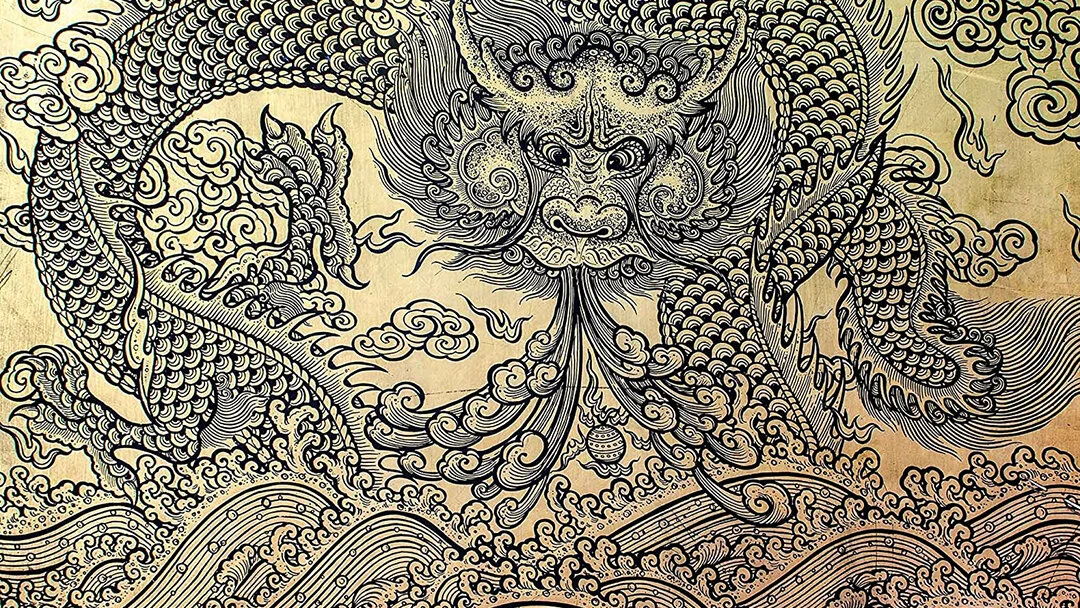
The Myth of the Shadow Dragon: A Short Story by Sara Murphy
Shadow Dragon is the name given to Yin Li, an orphan girl who appeared on the steps of the Southern Shaolin temple in the early years of the Tang Dynasty (around 700 AD).
Long Yinying, the Shadow Dragon, was an orphan girl who appeared on the steps of the Southern Shaolin temple in the early years of the Tang Dynasty (around 700 AD).
This is the story of how she became the high elder of the temple from her twentieth year until her death.
No woman had ever lived and trained in the temple before, but the elders would not turn away the tiny, thin girl with her torn and dirt-smeared dress, bruised limbs, and bloodied lip. From where she came, no one knew. She came only with a name, Li Yin, and an age, 6. She wrote both down after the monks had fed and washed her and tended her wounds.
No more would she write — and nothing would she say for her first 14 years at the temple. Every night, she slept by the giant hearth in the main hall, on a soft blanket of goat skin said to have been brought to the temple by Bodhidharma himself. Every day, she practiced the Chan and Quan of Shaolin alongside first the boys and young men her age. Whenever she was free, she could be found not playing or talking among her cohort but staring into the hearth, telling it all her stories in silence.
14 years after Li Yin arrived, raiders who hated the Shaolin for their beliefs and wanted the temple riches for themselves attacked. They surrounded the temple in the middle of the night, rousing the monks with screams of anger and thirst for blood. Fierce duels broke out throughout the temple and its grounds; many bodies and swords collided, slicing and bruising skin. The raiders outnumbered the monks, but the monks were stronger. The raiders eventually realized that the temple’s destruction was a necessary consequence if they wanted to bring death — and death was what they most wanted. Torches were lit and placed against the wooden frame.
As the temple began to blaze from the ground upward, the monks stopped their combat to water the flames from the sacred pool in the middle of the great hall; their lives meant nothing compared to the survival of the temple and its teachings, inscribed on its walls and preserved in its scrolls. The raiders filled the vacuum left as the monks abandoned the fighting and rushed in to slaughter the monks as they tried to save their temple.
All this while, Li Yin had fought bravely alongside her male companions; her thigh had been sliced with a deep sword cut and her forearm burned where her sword hand had fallen into the fire. Unable to walk, she dragged herself towards the sacred pool, brushstrokes of her blood painting the stone floor.
It was as she reached the pool that the hearth spoke to her, though its own blazing fire was nothing but stiff smoke tendrils and glowing embers. Her voice hoarse after 14 years of silence, Li Yin whispered back, and the fire told her what she needed to say. Blood as well as words poured from her lip as she whispered commands.
The fire in the hearth suddenly blazed, and cries echoed throughout the temple: the tongues of fires devouring the temple walls had leapt into the hearth. Those raiders who did not flee in terror at seeing the fire vanish were soon killed. Only after the surviving monks had driven the last raider out did they notice Li Yin. She had lost not just blood as she fought but life force as she wove the words of power; she was too weak even to lift her head when they found her.
To save her required a painstaking and painful ritual from the oldest days: a ritual forged in fire and paid for with blood, whose name had long been lost. Slowly, the elders carved the story of how Li Yin commanded the fire into her back. Then, whispering the words painted on the fire-damaged scrolls, they warmed the bleeding cuts. The scars slowly bubbled upwards and sank downwards to form the characters that began: “This is the story of Long Yinying, the Shadow Dragon.”
*
When Long Yinying awoke after the ordeal, the elders knew she would live. With her first words to her fellow humans, she asked the elders to read her the story they had written.
They read the words above.
Browse by Tag:
- Activism
- Agriculture
- Blog
- Broadway
- Climate Change
- Drawdown
- Family Planning
- Fantasy
- Healthy Living
- Higher Education
- Inflammatory Bowel Disease
- Mass Incarceration
- Music Reviews
- Musings on Life
- Mythical Tales
- Nerdy Things
- New York City
- Poetry
- Portfolio
- Professional Life
- Research Article
- Shadow Dragon
- Short Stories
- Sonnets
- True Crime
- Unsolved Mysteries
- USA Guided Tours
- Whole 30 Diet
- Women's March