


Portfolio of Work
Thank you for perusing my writing portfolio. You will find a variety of works below from my personal blog and other publications.
I enjoy collaborating with passionate change-makers. If that’s you, let’s talk!

Unpopular Opinion: Surviving the Ivory Tower Has Made "Real World" Work a Cakewalk.
That’s when I realized that the rigorousness of my academic training overqualified me for “Real World” work in a good way.
“What are you going to do with a PhD in English?”
While completing my doctoral dissertation, I would always answer this skeptical question the same way: “Become an English professor, I hope.” Little did I realize that my PhD was preparing me for a much healthier, happier, and easier life outside of academia and teaching.
It’s a common myth that a humanities PhD is a deeply impractical pursuit, almost completely divorced from the concerns and needs of the world beyond campus borders. When I started freelancing, however, I was stunned at how well my writing was received and how quickly I was able to impress people in a variety of writing styles. That’s when I realized that the rigorousness of my academic training overqualified me for “Real World” work in a good way.
To complete my PhD in English literature, I had to write a dissertation: a book-length document in which I advanced a complex argument about a variety of literary works and used quotes from those works to prove my point. Dissertations are rarely masterpieces, since they are almost always a first attempt at a really difficult task. All you have to do is ask an academic how much they had to revise their dissertation to make it a published book to realize how messy they usually are.
However, few training programs give writers the opportunity to gain so much experience practicing how to communicate complex ideas clearly and concisely. While Malcolm Gladwell’s famous “10,000-hour” rule has been rightly debunked by the very researcher whose paper inspired Gladwell to make it up in the first place, writing is a notoriously painstaking and inefficient process. I spent six years, give or take, working on my dissertation. That’s a lot of years to hone very difficult skills.
In the same piece linked above, the author mentions that the quality of practice times is far more important than the quantity. One of the most daunting aspects of a dissertation is that you should be able, as the sayings go, to explain what you’re working on to your mother (who presumably knows nothing about your work), or an intelligent 13 year-old. That’s one of the toughest and most valuable writing skills I’ve ever encountered. Another valuable skill you learn when writing a dissertation is to take what is usually about a 40-page document and trim it down to half its size for a journal article or a conference paper. In short, you’re learning how to take a complex idea and scale it up or down depending what you need to do with it.
You’re also doing this work under crushing pressure. No editor or client I’ve worked with has been even half as demanding or critical as my PhD advisors. I don’t necessarily condone this “tough love” approach; mental health statistics showing that PhD students are far more depressed than the general population suggest that they need building up as much as tearing down. (In my experience, professors seem to assume that you’re already at the top of your field and therefore already know you’re good enough. The opposite is true; impostor syndrome is pervasive.)
These are just two of the many examples of how the rigor of my PhD experience more than prepared me for writing and editing outside of academia. I have received a depth and quality of training most writers and editors lack, and it has given me an overwhelming advantage when it comes to my work now. The best analogy I can give is the difference between running a marathon (which I’ve done, twice) with a 50lb weight on your back compared to running unburdened in the latest, most innovative training shoes. That’s not to say I don’t have things to learn, or that I don’t have room to improve. Rather, I’ve been able to learn what I need to know and implement it very quickly. Better yet, I have so much more confidence in myself and my work, and it shows.
So, if you’re an editor looking for a writer, or a writer looking for an editor, let go of the myth that PhDs in the real world have a steep learning curve. We’re more likely to be the most skilled, as well as the most knowledgable, people in the room. Even better, we love to keep learning, and we’re always ready to embrace a challenge.








Browse by tag:
- Women's March
- Shadow Dragon
- Whole 30 Diet
- Broadway
- New York City
- Unsolved Mysteries
- Professional Life
- Healthy Living
- Agriculture
- Poetry
- Inflammatory Bowel Disease
- USA Guided Tours
- Blog
- Drawdown
- Research Article
- Musings on Life
- Activism
- Higher Education
- Portfolio
- Family Planning
- Mythical Tales
- True Crime
- Climate Change
- Mass Incarceration
- Nerdy Things
- Sonnets
- Fantasy
- Music Reviews
- Short Stories
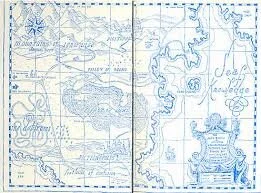
The Impossible Possibility of The Phantom Tollbooth
At that moment in my life, I needed the possibility of the impossible.
“WHY NOT?–
That’s a good reason for almost anything,” explains the gateman at the entrance to Dictionopolis, the mysterious kingdom of words in Norman Juster’s The Phantom Tollbooth. “A bit used, perhaps, but still quite serviceable.”
That used, but still quite serviceable, reason, “why not,” was the one that convinced me to finally read The Phantom Tollbooth. Like its young protagonist, Milo, I had too much time on my hands and nothing I wanted to do with it. And the brightly-covered blue paperback edged in pink, featuring a thinly-sketched boy pondering a dog with a giant clock for a midsection, was lying unread in my room.
I did not like fantasy. It scared me. Not in a Scary Stories to Tell in the Dark kind of way; I actually loved those books and the heebie jeebies they gave me. More in an anything beyond the lines of normal is bad kind of way.
The best illustration of this perplexing discomfort is how terrified and weirded out I was by Peter Gabriel’s “Sledgehammer” music video. Groundbreaking in its use of stop-motion animation and claymation, it contained all sorts of strange: two roast-ready chickens dancing, a portrait of Gabriel’s face made of vibrating pieces of fruit, a claymation version of the singer with sledgehammers for hands.
Even a fantastical title could put me off, and I was a voracious reader. It took me ages to crack open a copy of E.L. Konigsburg’s From the Mixed-Up Files of Mrs. Basil E. Frankweiler, which I loved. Even so, I could barely glance at my friend’s beloved copy of Konigsburg’s Jennifer, Hecate, Macbeth, William McKinley, and Me, as if it were a giant spider in the corner. Too many weird names. I’ve still never read it, though I love and have taught Macbeth.
Only a life-changing upheaval could persuade me to try fantasy, and mine was a doozy.
I didn't buy The Phantom Tollbooth; it was a gift. My friend Lesley and I no longer went to the same school, so I don’t even remember how she learned that I was in the hospital for a severe relapse of inflammatory bowel disease. All I know is that she and her mom brought me The Phantom Tollbooth. I set it aside, too drained for something potentially Peter Gabriel-esque. It was 1992. I was twelve.
Once home, slowly putting back the 30 pounds I had lost on my already small frame, I had a lot of solitary time on my hands. Both of my divorced parents worked, I lived in a neighborhood with no kids my age, and I didn’t have much energy to play, anyway. Books had always been my escape. Any words, really—my parents had given up years ago trying to keep me from reading the condiment labels at the dinner table. So, boredom+dis-ease+disease equaled “WHY NOT?” It was the right alchemical, astrological time for The Phantom Tollbooth.
Given this love of words, it makes sense that my fantasy breakthrough came through a book built upon puns and figurative language taken literally. The Phantom Tollbooth opens when Milo, a perpetually bored child, receives a mysterious package: a DIY purple cardboard tollbooth “FOR USE BY THOSE WHO HAVE NEVER TRAVELED IN LANDS BEYOND.” With a shrug, he figures he has nothing else to do and pays the fare.
His first stop is Expectations, from which he must—you guessed it—go Beyond. Insightful wordplay shapes the quest that Milo undertakes to bring the Princesses of Rhyme and Reason back to the Kingdom of Wisdom. From the scenic Point of View in the Forest of Sight, to the symphony of color that plays the sunrise and sunset into being, to the warring kingdoms of Dictionopolis and Digitopolis, Milo keeps encountering new ways of looking at old things--and seeing something in them he’s never noticed before.
With him throughout the journey are the Humbug, a pretentious yet ultimately kind and helpful insect, and Tock. Tock is the watchdog on the cover, guarding time with all the ferocity appropriate for a guard dog. (He roars with anger when Milo blithely mentions wasting time.)
This magical book filled me with a joy I hadn’t felt since my hospitalization. It was just so fun. As with all great books, moreover, the fun had a profound, purposeful wisdom to impart. After Milo, Tock, and the Humbug have successfully brought Rhyme and Reason home, King Azaz of Dictionopolis and the Mathemagician of Digitopolis tell Milo what they couldn’t say when he was setting off on his quest: that the whole thing was impossible:
“Yes, indeed,” they repeated together; “but if we’d told you then, you might not have gone--and, as you’ve discovered, so many things are possible just as long as you don’t know they’re impossible.”
At that moment in my life, I needed the possibility of the impossible.
I couldn’t imagine that I might, one day, feel better again. My guts had irrevocably changed, and with them my life. The Phantom Tollbooth showed me the weird could be wonderful and full of joy, not just wacky and full of nonsense. As a fellow boy Milo encounters at Point of View points out, “it's all in how you look at things.”
The Phantom Tollbooth helped me look at fantasy differently. It taught me that imagining things beyond the possible was not an act of insanity and abnormality but, rather, of courage and hope. It’s a lesson I’ve never forgotten.
Browse by tag:
- Activism
- Agriculture
- Blog
- Broadway
- Climate Change
- Drawdown
- Family Planning
- Fantasy
- Healthy Living
- Higher Education
- Inflammatory Bowel Disease
- Mass Incarceration
- Music Reviews
- Musings on Life
- Mythical Tales
- Nerdy Things
- New York City
- Poetry
- Portfolio
- Professional Life
- Research Article
- Shadow Dragon
- Short Stories
- Sonnets
- True Crime
- Unsolved Mysteries
- USA Guided Tours
- Whole 30 Diet
- Women's March
Freedom in Constraint: Why the Sonnet Is the Perfect Genre for a Lockdown
In this age of pandemic, the itch to write a sonnet comes on as suddenly as the itches on my face I fight not to scratch. Luckily, I can satisfy the former urge.
In this age of pandemic, the itch to write a sonnet comes on as suddenly as the itches on my face I fight not to scratch. Luckily, I can satisfy the former urge.
The sonnet is the perfect genre for a plague: a bite-sized poetic snapshot of a mood using strict patterns of rhyme and meter. Neither too time-consuming nor too easy, it’s an exercise of creative freedom within constraint. It’s the coronavirus lockdown in poetic form.
I am not a professional poet–not even amateur. Most of the poems I’ve written in my lifetime were school assignments. Like most people in these unprecedented times, however, I find myself doing unprecedented things. At a time when our eyeballs are chafing against windowsills and our cheeks are chafing against mask straps, the sonnet reminds us that rules can enable fun, not just suffocate it. If you’re someone whose creativity has been shut down by the shutdown, consider playing around with the sonnet form yourself.
The sonnet’s rise to poetic prominence is in part a plague story. The 14th-century Italian humanist and poet Francesca Petrarca (Petrarch to English speakers) didn’t invent the sonnet, but he popularized it. The 317 sonnets in his Il Canzionere, or ‘Songbook,’ chronicle a man’s unrequited love for a beautiful married woman named Laura. Her passionate gaze burns him like fire. Her icy coldness chills. Cupid’s arrows shoot into his heart and leave him in exquisite pain that sometimes feels like pleasure.
Then she dies. Scholars don’t agree on whether Laura was a real person, but the best candidate is a noblewoman named Laura de Noves, who died at 38 of the Black Death. In Il Canzionere, this event transforms the tone of the remaining sonnets from unrequited physical desire to spiritual veneration and longing.
These poems, in other words, tell the story of a socially and physically distant love devastated by plague.
The rules of the sonnet are relatively straightforward. Petrarch’s sonnetti (‘little songs’) are 14 lines and two stanzas long. Between the first 8 lines, or octet, and the sestet, the remaining six, is a volta, or ‘turn.’ It usually shifts tone and perspective from a more descriptive mode to a philosophical one.
In English, the standard sonnet meter is iambic pentameter: 10 syllables, divided into 5 pairs of unstressed-stressed sounds (da DUH). The rhyme scheme can vary. Petrarch used ABBA ABBA for the octet, then some combination of CDE CDE for the sestet. Spenser copied him.
Shakespeare, that endless innovator, created an easier version for a language with a lot fewer rhymes: ABAB CDCE EFEF GG. (Four quatrains and a couplet.) Those are the rules, but remember that rules are meant to be broken.
Robert Frost, who published nearly 40 sonnets himself, once called free verse “tennis without a net.” The game, he implies, would be boring if the webbing and the lines didn’t compel players to develop devastating shots and angles. Same with board games: the possibilities are infinite without being exhausting precisely because the rules already exist. We just play the game; we don’t have to invent it.
Love remains the sonnet’s most common subject, but it’s not the only one.
Keats wrote sonnets about reading Shakespeare. Wanda Coleman wrote about slavery. In 2018, Terrence Hayes published American Sonnets for My Present and Future Assassin, meditating on what it means to be a black man in Trump’s America. The most anthologized one opens,
I lock you in an American sonnet that is part prison,
Part panic closet, a little room in a house set aflame.
I lock you in a form that is part music box, part meat
Grinder . . . . (ll.1-4)
Hayes’s sonnets rarely rhyme. They disregard meter almost completely. Yet their rhythms are dynamic. They, too, take on a virus: the systemic virus of racism that plagued American society long before coronavirus.
When asked why he chose the sonnet form, Hayes said it provided “a great kind of containment.” It’s a perfect description. The sonnet demands concision. It asks that we pay attention to the form and sound of a word as much as the content. It requires focus in a time when, as I wrote in one of my own plague sonnets:
My sense of time has calcified to rust,
Like I’m suspended in solution, free
Of meaning, referentless . . . .
It helps me process the strangeness of these days with humor and compassion, as in this sonnet I wrote on boredom:
. . . . The line is thin
Between ennui and madness. Ask Wuhan,
Four months in. Playing pool with chopsticks, dressed
In sheets and giving speeches, like a queen
(Ordained or drag, your guess.) Thus boredom dons
A festive mask that fails to mask the stress.
Even when my other writing is as blocked as a clogged toilet, an hour spent making up rhymes and playing with the length of lines helps me remember why I loved writing in the first place.
Nowadays, when the inspiration hits, I pull out my pocket-sized spiral notebook and my mechanical pencil and have some fun. After all, as my first plague sonnet concludes:
When movement kills, but stasis mummifies,
At least our minds and pens have space to glide.
Browse by Tag:
- Activism
- Agriculture
- Blog
- Broadway
- Climate Change
- Drawdown
- Family Planning
- Fantasy
- Healthy Living
- Higher Education
- Inflammatory Bowel Disease
- Mass Incarceration
- Music Reviews
- Musings on Life
- Mythical Tales
- Nerdy Things
- New York City
- Poetry
- Portfolio
- Professional Life
- Research Article
- Shadow Dragon
- Short Stories
- Sonnets
- True Crime
- Unsolved Mysteries
- USA Guided Tours
- Whole 30 Diet
- Women's March
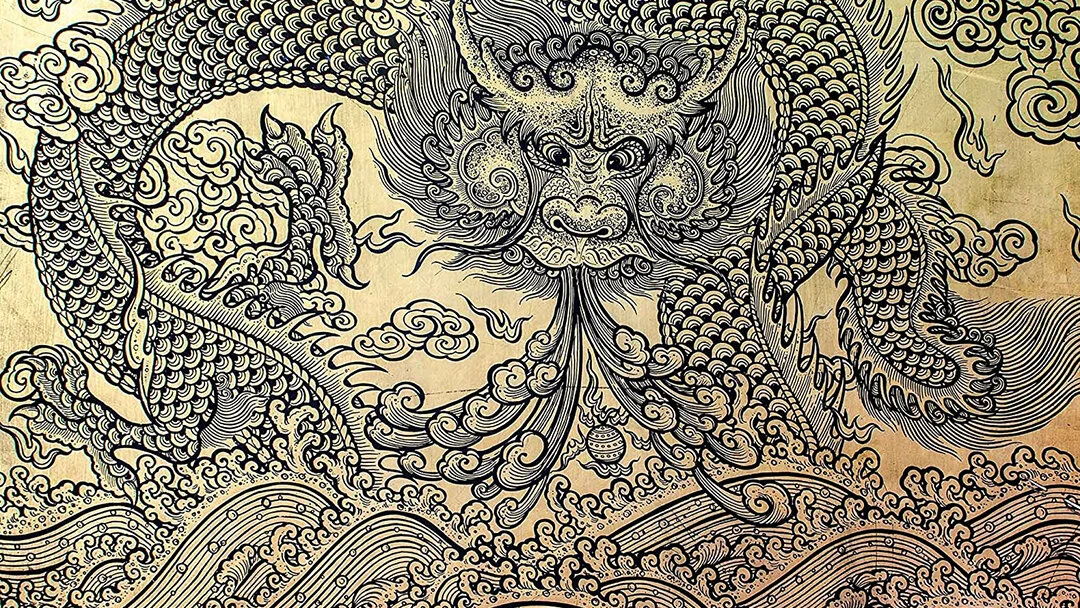
The Myth of the Shadow Dragon: A Short Story by Sara Murphy
Shadow Dragon is the name given to Yin Li, an orphan girl who appeared on the steps of the Southern Shaolin temple in the early years of the Tang Dynasty (around 700 AD).
Long Yinying, the Shadow Dragon, was an orphan girl who appeared on the steps of the Southern Shaolin temple in the early years of the Tang Dynasty (around 700 AD).
This is the story of how she became the high elder of the temple from her twentieth year until her death.
No woman had ever lived and trained in the temple before, but the elders would not turn away the tiny, thin girl with her torn and dirt-smeared dress, bruised limbs, and bloodied lip. From where she came, no one knew. She came only with a name, Li Yin, and an age, 6. She wrote both down after the monks had fed and washed her and tended her wounds.
No more would she write — and nothing would she say for her first 14 years at the temple. Every night, she slept by the giant hearth in the main hall, on a soft blanket of goat skin said to have been brought to the temple by Bodhidharma himself. Every day, she practiced the Chan and Quan of Shaolin alongside first the boys and young men her age. Whenever she was free, she could be found not playing or talking among her cohort but staring into the hearth, telling it all her stories in silence.
14 years after Li Yin arrived, raiders who hated the Shaolin for their beliefs and wanted the temple riches for themselves attacked. They surrounded the temple in the middle of the night, rousing the monks with screams of anger and thirst for blood. Fierce duels broke out throughout the temple and its grounds; many bodies and swords collided, slicing and bruising skin. The raiders outnumbered the monks, but the monks were stronger. The raiders eventually realized that the temple’s destruction was a necessary consequence if they wanted to bring death — and death was what they most wanted. Torches were lit and placed against the wooden frame.
As the temple began to blaze from the ground upward, the monks stopped their combat to water the flames from the sacred pool in the middle of the great hall; their lives meant nothing compared to the survival of the temple and its teachings, inscribed on its walls and preserved in its scrolls. The raiders filled the vacuum left as the monks abandoned the fighting and rushed in to slaughter the monks as they tried to save their temple.
All this while, Li Yin had fought bravely alongside her male companions; her thigh had been sliced with a deep sword cut and her forearm burned where her sword hand had fallen into the fire. Unable to walk, she dragged herself towards the sacred pool, brushstrokes of her blood painting the stone floor.
It was as she reached the pool that the hearth spoke to her, though its own blazing fire was nothing but stiff smoke tendrils and glowing embers. Her voice hoarse after 14 years of silence, Li Yin whispered back, and the fire told her what she needed to say. Blood as well as words poured from her lip as she whispered commands.
The fire in the hearth suddenly blazed, and cries echoed throughout the temple: the tongues of fires devouring the temple walls had leapt into the hearth. Those raiders who did not flee in terror at seeing the fire vanish were soon killed. Only after the surviving monks had driven the last raider out did they notice Li Yin. She had lost not just blood as she fought but life force as she wove the words of power; she was too weak even to lift her head when they found her.
To save her required a painstaking and painful ritual from the oldest days: a ritual forged in fire and paid for with blood, whose name had long been lost. Slowly, the elders carved the story of how Li Yin commanded the fire into her back. Then, whispering the words painted on the fire-damaged scrolls, they warmed the bleeding cuts. The scars slowly bubbled upwards and sank downwards to form the characters that began: “This is the story of Long Yinying, the Shadow Dragon.”
*
When Long Yinying awoke after the ordeal, the elders knew she would live. With her first words to her fellow humans, she asked the elders to read her the story they had written.
They read the words above.
Browse by Tag:
- Activism
- Agriculture
- Blog
- Broadway
- Climate Change
- Drawdown
- Family Planning
- Fantasy
- Healthy Living
- Higher Education
- Inflammatory Bowel Disease
- Mass Incarceration
- Music Reviews
- Musings on Life
- Mythical Tales
- Nerdy Things
- New York City
- Poetry
- Portfolio
- Professional Life
- Research Article
- Shadow Dragon
- Short Stories
- Sonnets
- True Crime
- Unsolved Mysteries
- USA Guided Tours
- Whole 30 Diet
- Women's March